Seachem Prime Fresh and Saltwater Conditioner, 500 ml Review (2026)
Updated September 14, 2026 · Research-based review
Our verdict
A concentrated conditioner that detoxifies chlorine, chloramine and ammonia in one dose and works across both freshwater and saltwater tanks, making it a staple bottle for most fishkeepers. The concentrated formula means precise dosing matters in nano tanks, and the sulfur smell during dosing puts some owners off.
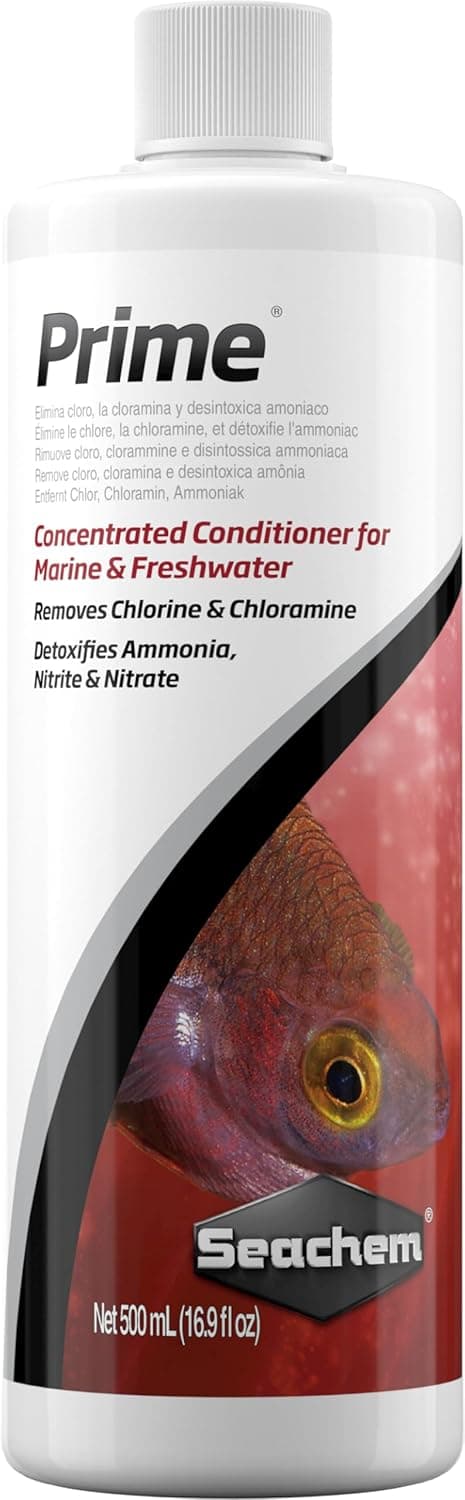
Seachem Prime fresh and saltwater conditioner in 500 ml, a concentrated dechlorinator that also binds ammonia.
Price range: See on Amazon
What we liked
- + Concentrated formula treats a huge volume from the 500 ml bottle
- + Detoxifies chlorine, chloramine and ammonia in one product
- + Works in both freshwater and saltwater aquariums
Trade-offs
- - Strong sulfur smell when dosing, which some owners find unpleasant
- - Concentrated doses are easy to overpour in nano tanks
Who this conditioner is for
This conditioner suits any freshwater or saltwater aquarium keeper doing routine water changes, since it handles chlorine and chloramine neutralization plus ammonia detoxification in a single dose rather than requiring separate products for each job. Its concentrated formula makes the 500 ml bottle stretch across a large number of water changes, which appeals to keepers with multiple tanks or larger aquariums who do not want to restock conditioner every few weeks. New tank owners cycling a fresh setup benefit especially from the ammonia binding property, since it can reduce the toxicity of ammonia spikes during the establishment period while beneficial bacteria are still developing. Because the same bottle works in both fresh and saltwater, reef and marine keepers do not need a separate freshwater-only product.
What the formula actually does
According to the manufacturer's dosing information, Prime removes approximately 1 mg per liter of ammonia, 4 mg per liter of chloramine, or 5 mg per liter of chlorine at a standard dose of one capful, or 5 ml, per 200 liters, roughly 50 US gallons, of new water. For exceptionally high chloramine concentrations, the manufacturer states a double dose can be used safely. The formula is designed to convert ammonia into a less toxic, temporarily bound form that beneficial bacteria in an established or cycling filter can still process, rather than permanently removing it from the water column, which is why regular water changes and filtration remain necessary alongside conditioner use.
Dosing it correctly day to day
Because the formula is concentrated, precise dosing matters more with this product than with less concentrated conditioners, and the manufacturer notes each cap thread holds roughly 1 ml for measuring smaller volumes accurately. For nano and small tanks, the manufacturer's alternative guidance of about 2 drops per gallon helps avoid overdosing, since pouring a full capful into a small tank would apply far more than needed. Many owners find the product's characteristic sulfur smell noticeable while dosing, which fades once mixed into tank water but is worth expecting the first time you open the bottle. Standard practice is to add the conditioner to new water first, before or as it goes into the tank, rather than after fish are already exposed to unconditioned water.
How it compares with other conditioners
In the site's water conditioner guide this 500 ml bottle ranks first of seven, ahead of the smaller 250 ml and larger 16.9 fl oz and 2 liter sizes of the same Seachem Prime formula, as well as ahead of API's Tap Water Conditioner and Aqua Essential lines. The ranking reflects that this size hits a practical middle ground between value and quantity for most home aquarium keepers, without the storage footprint of the largest 2 liter bottle or the frequent restocking needed with the smallest 250 ml size. Compared with the API alternatives in the same guide, Prime's combined chlorine, chloramine and ammonia detoxification in one product is the main differentiator, since some competing conditioners handle only chlorine and chloramine without the added ammonia binding step.
Trade-offs and who should choose a different size
The concentrated nature of this formula is a double edged trade-off: it makes the bottle last longer overall, but it also raises the risk of overdosing in small nano tanks if measured by eye rather than with care, so nano tank owners should lean on drop counting rather than capfuls. The smell during dosing, while harmless, is a minor daily annoyance some owners mention. Keepers with a single large tank doing frequent water changes may find the largest 2 liter size more economical per dose, while someone with just one small tank may prefer the smaller 250 ml bottle to avoid a half-used bottle sitting for a long time. For most single to multi-tank freshwater or saltwater setups, the 500 ml size hits a strong balance of value and practicality, earning our score of 9.4 out of 10.
Frequently asked questions
How much Seachem Prime should I use per water change?
The manufacturer's standard dose is one capful, about 5 ml, per 200 liters or roughly 50 US gallons of new water; for nano tanks, about 2 drops per gallon is the recommended alternative measure.
Does Prime work in both freshwater and saltwater tanks?
Yes, the manufacturer markets and formulates it for use in both freshwater and saltwater aquariums.
Can I use a double dose if my tap water has high chloramine?
The manufacturer states a double dose can be used safely for exceptionally high chloramine concentrations, though for any water quality concerns beyond typical tap water treatment, follow the manufacturer's full dosing instructions.
Why does Prime smell like sulfur when I dose it?
The concentrated formula has a characteristic sulfur smell during dosing that many owners notice, though it fades once mixed into tank water and is a normal characteristic of the product.
Prices change often, so check the current price and availability on Amazon.
Check price on AmazonAquascape Nest may earn a commission from the link above.