Luffy Beautify Aquascape Wire Stainless Steel Mesh 5 Pieces Review (2026)
Updated September 20, 2026 · Research-based review
Our verdict
This Luffy stainless steel mesh pack suits aquascapers building moss walls or carpets who want a rust proof frame for tying down java, riccia, or similar mosses. Five pieces give enough material for a decent sized feature, though exact piece dimensions are not listed, so plan your layout once they arrive.
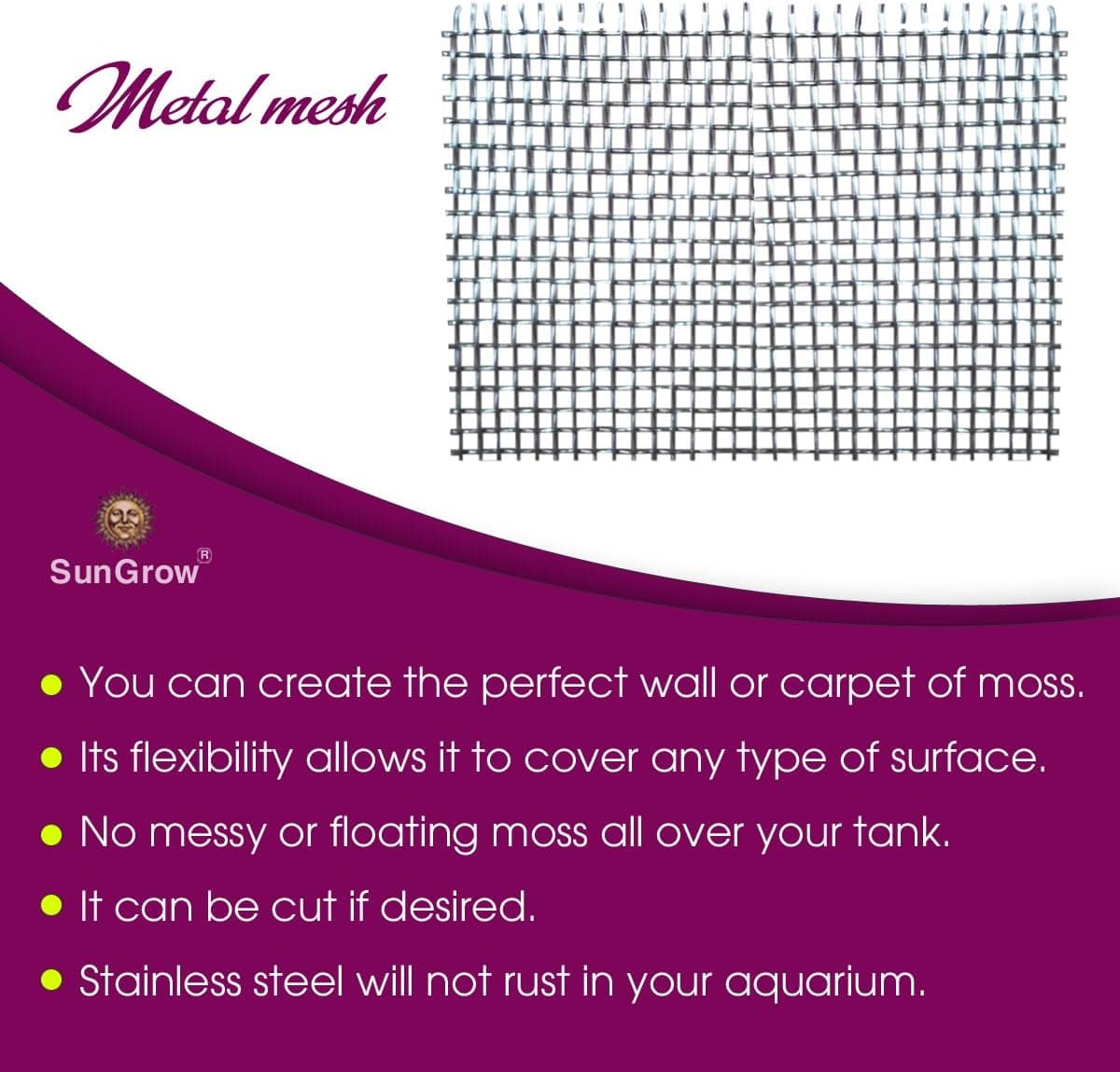
Luffy aquascape stainless steel wire mesh, 5 pieces, for creating moss walls, carpets and mounted moss features.
Price range: See on Amazon
What we liked
- + Stainless steel resists rust underwater, so pads last for years
- + Five pieces allow multiple moss pads or a wall
- + Luffy is known for moss and aquascaping supplies
Trade-offs
- - Piece sizes vary, so plan the final layout once they arrive
- - Sharp edges can snag hands during trimming
What this mesh is for
This pack contains five pieces of stainless steel wire mesh designed for attaching aquatic mosses such as java moss, Christmas moss, pellia, and riccia to create moss walls, moss carpets, or moss covered décor in a planted tank. The basic method is to sandwich moss fragments between two layers of mesh, or tie moss onto a single sheet with fine thread or fishing line, so the moss has something stable to root and spread across as it grows in rather than floating loose or washing around the tank. Because the mesh is rigid but bendable, it can also be curved around driftwood or rocks to add contour to a moss covered feature rather than staying flat, which gives more flexibility in aquascape design than a plain flat pad.
Material and durability
The mesh is made from stainless steel, which is the standard material choice for this kind of aquarium hardware because it resists rust and corrosion in a constantly wet, submerged environment where regular steel or iron would deteriorate and potentially leach into the water. That corrosion resistance means a well made stainless mesh can last for years submerged without breaking down or becoming an eyesore as moss grows over and eventually hides it entirely. The material is also flexible enough to bend by hand into a curved or contoured shape around hardscape while still holding that shape afterward, rather than springing back flat, which is useful when building a mesh over driftwood or a rounded rock rather than a flat tank wall or floor.
Sizing and planning your layout
This particular listing does not specify the exact dimensions of each of the five individual pieces, so buyers should plan to measure and lay out their intended moss wall or carpet area once the mesh arrives rather than assuming a specific coverage size in advance. Because the pieces can be bent, trimmed, or combined by overlapping edges, exact factory dimensions matter less than they would for a rigid, single sheet product, since you can piece together coverage across a larger area or cut mesh down for a smaller spot as needed. Wire cutters or sturdy scissors make trimming mesh to fit straightforward, and any cut edges should be checked and smoothed if needed before handling, since freshly cut wire mesh can leave sharp edges that catch on skin during trimming or installation.
Building a moss wall or carpet
To build a wall, mesh is typically mounted vertically against the back or side glass using suction cups or by wedging it between hardscape, with moss tied on using cotton or fishing thread until it has had time to attach its own rhizoids to the mesh. For a carpet effect, mesh is laid flat on the substrate and weighted down with rocks or driftwood while moss spreads across it and eventually roots into the mesh itself, at which point the weights can often be removed. Either approach takes patience, since moss generally needs several weeks under adequate light to fill in and visually cover the mesh underneath, but once established the mesh becomes invisible and the moss holds its shape far better than moss simply glued or tied to hardscape without a supporting frame.
Bottom line
For anyone planning a moss wall, carpet, or similar mossy feature, this five piece Luffy mesh pack gives a practical, rust resistant foundation that outlasts glue or thread alone and can be shaped to fit driftwood, rock, or flat surfaces. The lack of stated piece dimensions means some planning after delivery is needed rather than ordering to an exact known coverage area, and handling freshly cut or trimmed edges carefully avoids minor scrapes during setup. Given how well established Luffy is in moss and aquascaping accessories, and how straightforward stainless mesh is to work with once you have it in hand, this is a reasonable pick for hobbyists ready to commit to the patience a moss feature requires.
Frequently asked questions
How do you attach moss to this mesh?
Moss is typically tied onto the mesh with fine cotton or fishing thread, or sandwiched between two layers of mesh, until it roots into the mesh on its own over several weeks.
Will this stainless steel mesh rust in my aquarium?
No, stainless steel is chosen specifically because it resists rust and corrosion when submerged, which is why it is a common material for aquascaping mesh.
What size are the five pieces in this pack?
Exact dimensions are not stated for this listing, so it is worth planning your moss wall or carpet layout after the mesh arrives and can be measured.
Can this mesh be bent to fit around driftwood or rocks?
Yes, the mesh is rigid but flexible enough to bend and hold a curved shape, so it can be molded around hardscape rather than only used flat.
Prices change often, so check the current price and availability on Amazon.
Check price on AmazonAquascape Nest may earn a commission from the link above.