Brightwell Aquatics Purit Next-Generation Chemical Filtration Media 33.8 fl oz Review (2026)
Updated September 20, 2026 · Research-based review
Our verdict
Brightwell's Purit blends activated carbon with ion-exchange resins to pull ammonia, nitrate, phosphate, silicate, and dissolved organics from freshwater or marine water at once. The 33.8 fl oz size treats a good volume for months, but it ships loose and needs a separate media bag, and heavy use can pull trace fertilizer elements too.
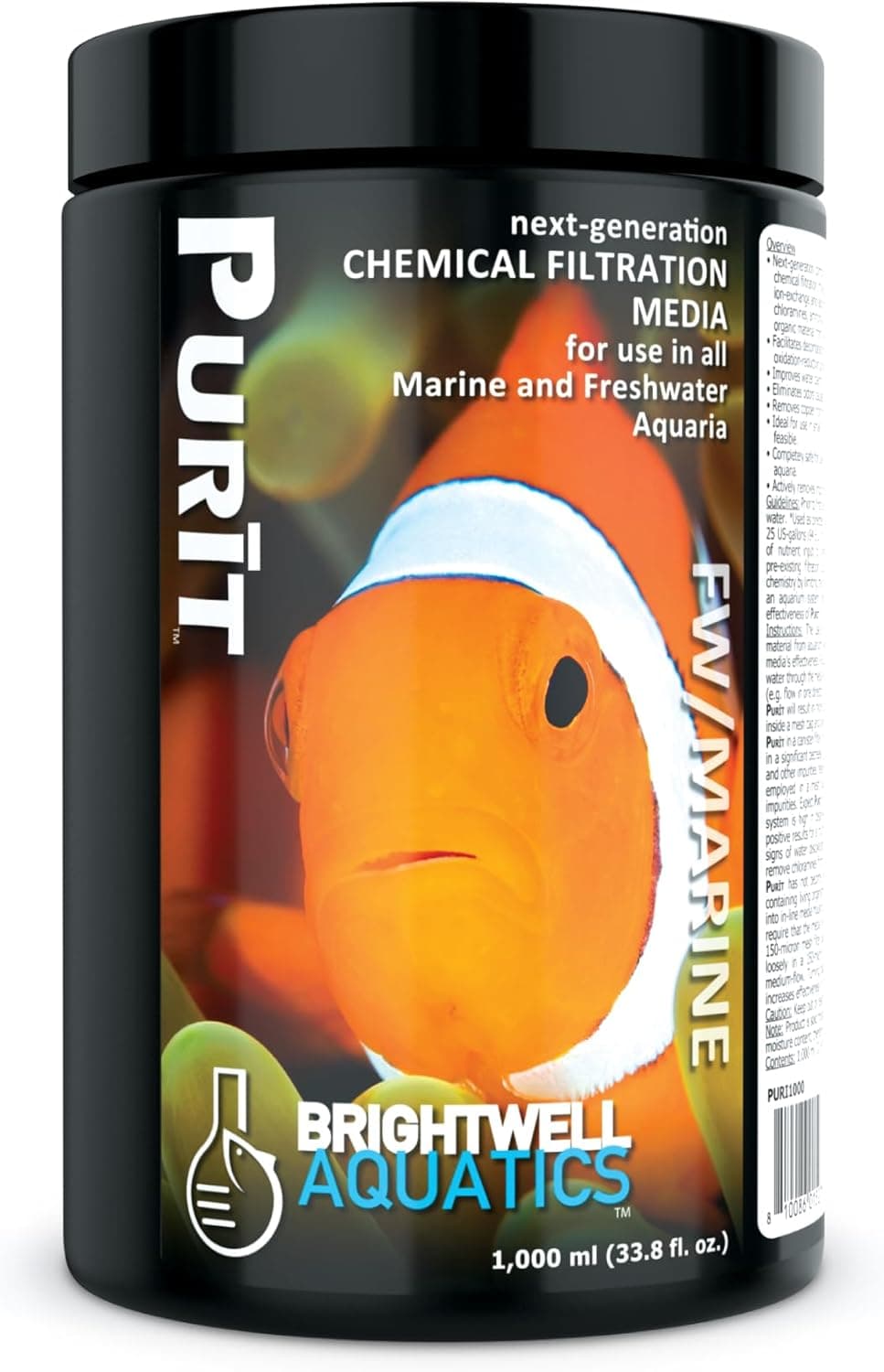
Brightwell Aquatics Purit next-generation chemical filtration media in a 33.8 fl oz size, for polishing water crystal clear.
Price range: See on Amazon
What we liked
- + Chemical media targets dissolved organics that cause yellow tint in water
- + Large 33.8 fl oz size treats big tanks or lasts a long time in small ones
- + Brightwell is a respected brand in reef and freshwater chemistry
Trade-offs
- - Chemical media can strip some fertilizers, so dosing may need adjusting
- - Needs a fine media bag to keep beads contained, which is sold separately
Who this filtration media fits
Purit is built for keepers who want one chemical media doing several jobs at once rather than running separate carbon, phosphate remover, and ammonia absorber products side by side. It works in both marine and freshwater aquaria, which makes it a flexible pick for anyone who keeps more than one type of tank and wants to standardize on a single chemical filtration product. The 33.8 fl oz size gives enough volume to treat a meaningful amount of water for months before replacement, based on the maker's stated dosing rate, which suits established tanks doing routine maintenance rather than an emergency one-time treatment. It is a good fit for anyone chasing crystal clear, tint-free water or trying to knock down odors from decaying organic matter, and less necessary for a bare, lightly stocked tank with minimal bioload.
What Purit removes and how it works
According to Brightwell, Purit combines enhanced activated carbon with NSF-grade ion-exchange and adsorptive resins engineered to remove impurities including chloramine, ammonia, nitrate, phosphate, silicate, heavy metals, and dissolved organic material. The blend also supports oxidation-reduction reactions that can raise ORP and improve overall water quality, alongside its more visible job of clearing water discoloration and removing tannins or dyes that give water a yellow or brown tint. Beyond general filtration, the maker notes it can pull copper out of a system after medicating with copper-based treatments, along with other heavy metals that accumulate over time. This multi-function design is the main selling point over single-purpose carbon or resin products that only target one class of contaminant at a time.
Dosing and running it
Brightwell's guidance calls for roughly 100 milliliters of Purit per 25 gallons of water, with that dose lasting about two to four months depending on bioload, feeding, and how much organic waste the tank produces. Because the media ships loose rather than pre-bagged, it needs to be placed inside a mesh media bag before going into a canister, sump, or hang on back filter compartment, which is a small extra step and purchase compared with pre-bagged competitors. Running any broad-spectrum chemical media like this alongside a heavily fertilized planted tank calls for some caution, since ion-exchange resins can strip trace elements and some fertilizer components along with the impurities they are meant to target, so dosing schedules may need adjusting to compensate.
How it compares with other chemical media
Against combination products like Seachem's Purigen paired with carbon, or Boyd's Chemi-Pure Blue, Purit competes in the same category of all-in-one chemical filtration rather than single-purpose carbon or resin. Chemi-Pure Blue ships in a self-contained mesh bag, which saves the extra step Purit requires, while Seachem's Matrix and Purigen combination splits biological and chemical media into two separate products rather than one blended mix. Simpler bio ball and ceramic ring kits from budget brands target biological filtration surface area rather than chemical polishing, so they solve a different problem and are not a direct substitute for what Purit does in a filter stack.
Verdict and who should pick something else
Purit earns its spot as a broad, USA-made chemical filtration media for keepers who want one product handling carbon, ion-exchange, and adsorption duties across freshwater or marine tanks. Pick it for a tank fighting tinted water, lingering odors, or elevated nitrate and phosphate that a biological filter alone is not clearing. Budget a mesh media bag alongside it, and consider a pre-bagged product like Chemi-Pure Blue instead if avoiding that extra step matters, or watch fertilizer dosing closely in a heavily planted tank where resin media can strip trace elements plants need.
Frequently asked questions
Does Purit work in both freshwater and saltwater tanks?
Yes, Brightwell markets it for use in all marine and freshwater aquaria.
How much Purit should be dosed per tank size?
Brightwell's guidance is about 100 milliliters per 25 gallons, lasting roughly two to four months depending on bioload and feeding.
Does Purit come in a media bag?
No, it ships as loose media, so it needs to be placed in a separate mesh filter bag before use in a canister, sump, or hang on back filter.
Can Purit affect fertilizer dosing in a planted tank?
It can, since ion-exchange resins may strip some trace elements along with impurities, so dosing schedules may need adjusting in heavily fertilized tanks.
Prices change often, so check the current price and availability on Amazon.
Check price on AmazonAquascape Nest may earn a commission from the link above.