Boyd Chemi-Pure Blue 11 oz Aquarium Filtration Media Carbon + Ion-Exchange Resins Review (2026)
Updated September 20, 2026 · Research-based review
Our verdict
Chemi-Pure Blue combines pelleted carbon with ion-exchange resin in one nylon bag to pull organics, phosphates, and metals from tank water, and this 11 oz size sizes it for a typical home aquarium. It is marketed mainly for reef and marine tanks but is also used in high pH freshwater setups, and the bag will not fit every nano filter.
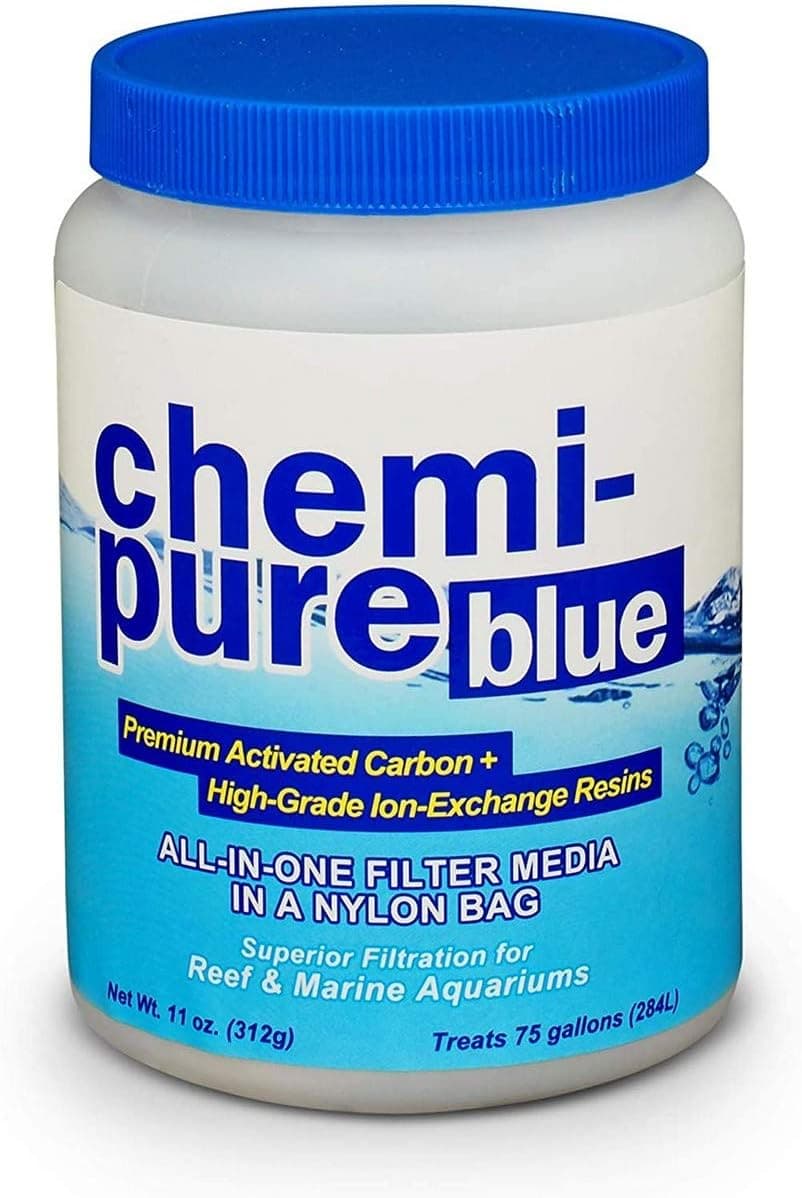
Boyd Chemi-Pure Blue 11 oz carbon plus ion-exchange resin media, a drop-in chemical filter bag for clearer water.
Price range: See on Amazon
What we liked
- + Carbon and ion-exchange resins combine to pull organics and discoloration
- + Pre-bagged format drops straight into canisters and HOB filters
- + The 11 oz size is sized to treat a typical home aquarium
Trade-offs
- - Pre-filled bag shape may not fit into very small nano filters
- - Once exhausted it must be replaced, as it is not easily recharged
Who this filter media fits
Chemi-Pure Blue fits keepers who want a single drop-in media that handles chemical filtration broadly rather than choosing separate carbon and resin products, since it combines both into one pre-measured bag. It is positioned by its maker mainly for reef and marine aquariums, where clearing dissolved organics, phosphates, and trace metals matters for coral health and water clarity, and it is also commonly used in high pH freshwater setups such as African cichlid tanks where similar water quality concerns apply. Keepers running a canister filter or hang-on-back filter with room for a standard-sized bag are the best fit, since the product is sized and shaped for those common filter types rather than for the tightest nano filter chambers. Reef keepers dosing carbon and specialty resins separately for more granular control may prefer standalone products instead of this combined bag.
What it removes and how it works
The bag combines premium, low-dust pelleted activated carbon with high capacity ion-exchange resins, a pairing designed to reduce organic compounds, discoloration, odors, and phenols alongside dissolved metals and phosphates in one pass through the filter. Carbon media generally works by adsorbing dissolved organic molecules onto its porous surface, while ion-exchange resin targets specific dissolved compounds like phosphate and certain metals through a different chemical mechanism, so combining both in one bag covers more of what commonly clouds or discolors aquarium water than carbon alone would. The nylon bag format keeps both media contained and easy to place directly into a filter's media basket or canister tray without loose granules scattering through the system, and it can be lifted out cleanly once exhausted.
Sizing and fit in different filters
The 11 oz size is sized to treat a standard home aquarium, and because it ships as one continuous bag rather than a divisible product, the whole bag needs to fit inside the available media space in a filter. Larger canister filters and most hang-on-back filters with a dedicated chemical media basket accommodate the bag without difficulty, but very small nano filters with a tight internal chamber may not have enough room for the full 11 oz bag, and keepers running nano setups should measure their filter's media compartment before buying this size rather than a smaller one. Once the media is exhausted, typically signaled by reduced water clarity or returning discoloration, the whole bag needs replacing rather than recharging, since the carbon and resin combination is not designed to be regenerated at home.
Freshwater versus saltwater use
Chemi-Pure Blue is marketed by Boyd Enterprises primarily as an all-in-one marine and reef filtration media, and its promotional material leans heavily on results for saltwater and coral tanks specifically. That said, the same carbon and ion-exchange combination is also used successfully in freshwater aquariums, particularly higher pH setups like African cichlid tanks, since dissolved organics and clarity concerns are not exclusive to marine systems. Freshwater keepers running a softer, more acidic tank built around different species should weigh whether the ion-exchange resin's chemistry fits their setup, since it was primarily formulated with marine water conditions in mind rather than optimized for every freshwater scenario.
Verdict and who should pick something else
This media earns a solid score as a genuinely broad, convenient chemical filtration option that combines carbon and resin in one bag rather than requiring separate products, and the 11 oz size fits most standard canister and hang-on-back filters without trouble. It suits reef and marine keepers best, matching its primary marketing, while also serving high pH freshwater keepers reasonably well. Nano tank owners should check their filter's chemical media space before buying, since the bag may not fit the smallest chambers, and reef keepers wanting to fine-tune carbon and resin ratios separately may prefer standalone products over this combined bag. Replace the whole bag rather than expecting it to be rechargeable once its capacity is used up.
Frequently asked questions
What does Chemi-Pure Blue remove from aquarium water?
It combines carbon and ion-exchange resin to reduce organic compounds, discoloration, odors, phenols, dissolved metals, and phosphates.
Is Chemi-Pure Blue safe for freshwater tanks?
It is marketed mainly for reef and marine aquariums but is also commonly used in freshwater setups, particularly higher pH tanks like African cichlid systems.
Will the bag fit in a nano filter?
It may not; the 11 oz bag is sized for standard canister and hang-on-back filters, so nano filters with a tight media chamber should be measured first.
Can Chemi-Pure Blue be recharged and reused?
No, once the carbon and resin are exhausted the whole bag needs to be replaced rather than regenerated.
Prices change often, so check the current price and availability on Amazon.
Check price on AmazonAquascape Nest may earn a commission from the link above.