JARDLI Glass Inline CO2 Atomizer Diffuser 17mm for 16/22mm Hose Review (2026)
Updated September 21, 2026 · Research-based review
Our verdict
This inline glass diffuser mounts inside the canister return line, so no visible atomizer sits in the tank. It fits 16/22mm hose and mixes CO2 into a fine mist as filtered water passes through, a good pick for canister owners who want a clean front glass, though HOB filter users cannot mount it at all.
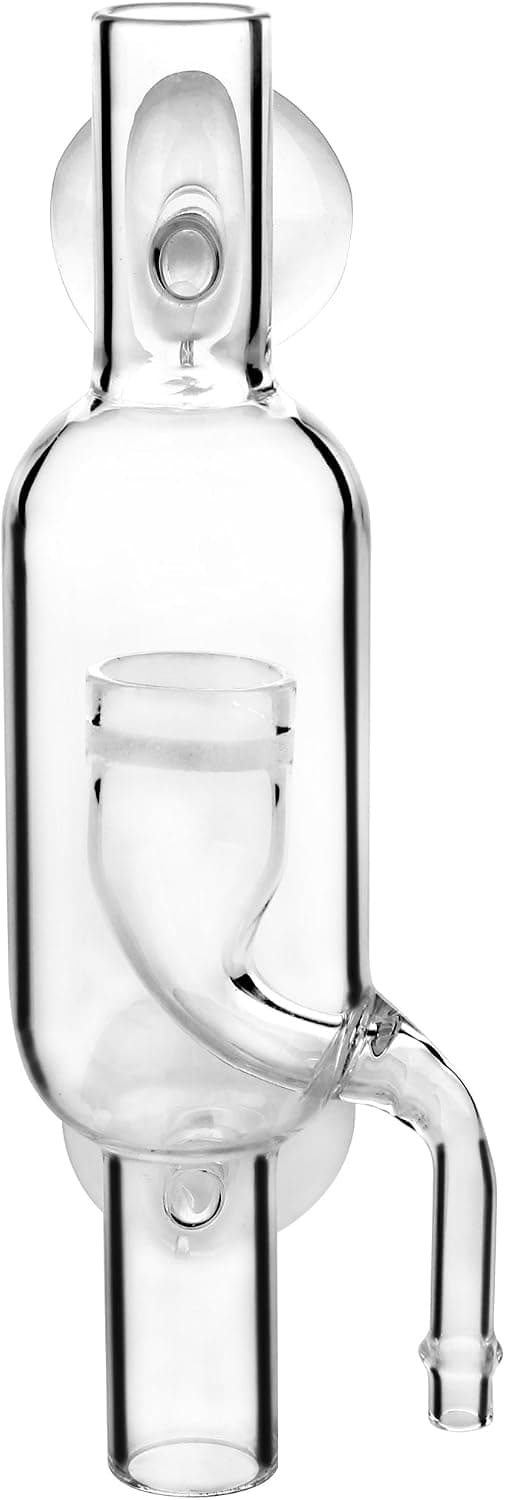
JARDLI glass inline CO2 atomizer 17mm for 16/22mm hose, an external diffuser that hides CO2 hardware outside the tank.
Price range: See on Amazon
What we liked
- + Inline mounting on the canister return keeps the diffuser out of view
- + Sized for 16/22mm hose, a common canister filter tubing size
- + Mist dissolves in the filter outflow, which improves CO2 efficiency
Trade-offs
- - Needs a canister with matching hose size, so HOB tanks cannot use it
- - Glass body can crack if hoses are twisted during maintenance
Who this diffuser fits
This diffuser is built for planted tank keepers who already run a canister filter and want to inject CO2 without a separate atomizer sitting visibly inside the aquarium. Because it threads inline into the outflow tubing, either under the stand or mounted against the outside of the glass, the whole CO2 delivery point disappears from view, which matters most to aquascapers chasing a clean, uncluttered layout. It is sized specifically for 17mm outer diameter glass fitting 16/22mm, roughly 5/8 inch inside diameter, hose, the size used by many mid-size canister filters. Keepers running hang on back filters or canisters with narrower or wider tubing are not a match for this exact model, since the fit is specific rather than universal, and a different diffuser or a different JARDLI inline size would suit those setups better.
What it includes and how it works
The diffuser is a glass inline fitting that installs directly into the canister filter's outflow hose, positioned so the full water flow passes through it before returning to the tank. CO2 gas is introduced into that flow, and the fitting's internal shape breaks the gas into a fine mist through turbulent mixing as the filter pushes water past it, rather than relying on a diffusion plate or ceramic disc sitting in open water. This inline mixing approach tends to dissolve CO2 more completely than plate diffusers before the water even reaches the tank, since the turbulence and contact time inside the fitting help gas absorb into solution. The result reaching the aquarium is water already carrying dissolved CO2 rather than visible bubbles needing to rise and dissolve on their own, which some aquascapers find both more efficient and less distracting to look at during the day.
Installing it and living with it
Installation means cutting into the existing canister outflow hose and fitting the glass body inline, then securing both hose ends onto the diffuser's barbed connections, a job that is straightforward on a canister already plumbed with 16/22mm tubing. Because the body is glass rather than plastic, it is more prone to cracking than a flexible fitting if the hose is twisted, bent sharply, or knocked during routine filter maintenance like media changes or hose cleaning, so handling it gently when disconnecting or reconnecting tubing matters. Once installed it needs little day to day attention, since there is no diffusion plate to clean or bubble counter to monitor separately, though checking that both hose clamps stay snug over time is worth doing during regular filter service to avoid leaks at the connection points.
How it compares with close rivals
JARDLI's own Pollen Glass diffusers, sold in versions for tanks under 20 gallons and for 20 to 50 gallon tanks, use a ceramic diffusion plate sitting inside the aquarium rather than an inline fitting, a visible but simpler setup that does not require canister filter plumbing. The Fluval Ceramic Diffuser works the same in-tank way and scores lower here for build, while the IAFVKAI Glass Spiral Atomizer adds a built in bubble counter and check valve to a similar spiral diffusion design. JARDLI's own Music Glass Diffuser, built for tanks beyond 75 gallons, is a larger in-tank option for keepers who need more diffusion capacity than an inline fitting or a small ceramic disc can provide. Against these, this inline model stands out mainly for hiding the hardware entirely, at the cost of needing a compatible canister filter to begin with.
Verdict and who should pick something else
Pick this diffuser if a canister filter running 16/22mm hose is already part of the setup and a completely hidden CO2 injection point matters more than having a visible bubble stream to monitor. It rewards aquascapers who prioritize a clean tank front and are comfortable handling glass fittings carefully during maintenance. Choose a different diffuser instead if the filter is a hang on back unit, if the canister tubing is a different diameter, or if watching CO2 bubble rate directly through an in-tank diffuser matters more than concealment, since JARDLI's own Pollen Glass or Music Glass lines cover those in-tank use cases.
Frequently asked questions
What hose size does this diffuser fit?
It is sized for 17mm outer diameter glass fitting 16/22mm hose, about 5/8 inch inside diameter, a common canister filter tubing size.
Can this be used with a hang on back filter?
No, it installs inline in canister filter outflow tubing, so it needs a canister filter with matching hose size rather than a HOB unit.
Why does the glass body sometimes crack?
Twisting or bending the connected hose sharply during maintenance can stress the glass fitting, so it should be handled gently when disconnecting tubing.
Does this diffuser need a separate bubble counter?
The diffuser itself does not include one, so many keepers pair it with a separate glass or plastic bubble counter to monitor CO2 injection rate.
Prices change often, so check the current price and availability on Amazon.
Check price on AmazonAquascape Nest may earn a commission from the link above.