Manzanita Driftwood 20"-24" Review (2026)
Updated September 14, 2026 · Research-based review
Our verdict
This large 20 to 24 inch manzanita piece suits aquascapers building a tall display tank who want a dramatic branching centerpiece or the start of a moss tree. It resists rot and holds its shape for years underwater, but it is too large for a small or mid-size tank and needs patient waterlogging before it sinks on its own.
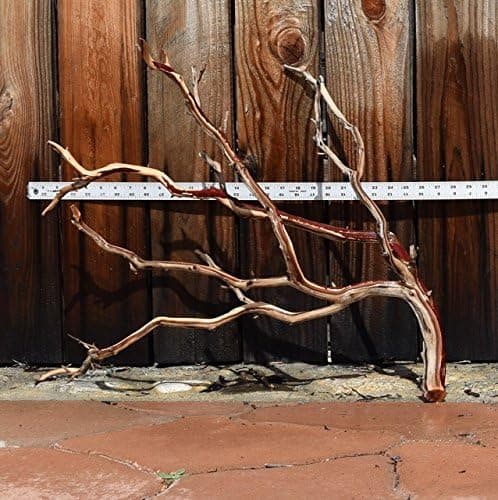
Manzanita driftwood in 20"-24", a large branching piece for big aquariums and dramatic tree scapes.
Price range: See on Amazon
What we liked
- + Large 20"-24" size suits big tanks with height to fill
- + Dense branching creates a dramatic focal point
- + Manzanita resists rot and holds shape for years underwater
Trade-offs
- - Too large for small or mid-size tanks without cutting branches down
- - Needs heavy anchoring until waterlogged, which can take weeks
Who this size of manzanita suits
At 20 to 24 inches, this piece is scaled for a large display tank, roughly 40 gallons and up, where there is enough vertical and horizontal room for dense branching to read as a focal point rather than crowding out swimming space. It suits an aquascaper planning a tree-style layout or an open branching hardscape that needs real height and spread, since smaller manzanita pieces in the 12 to 16 inch range simply cannot deliver the same dramatic silhouette. It is a poor match for a nano or small tank, where a piece this size would dominate the footprint, and most owners in that situation are better off starting with a 12 to 16 inch piece or cutting branches down to fit.
Material and why manzanita holds up
Manzanita is a dense hardwood valued in aquascaping specifically because it resists rot and keeps its shape underwater for years rather than softening or crumbling the way some softer driftwoods eventually do. It also releases noticeably less tannin into the water than woods like malaysian or spiderwood, which appeals to hobbyists who want the branching look of driftwood without a strong tea colored tint developing in the tank over time. The natural forking growth pattern of manzanita branches gives each piece a distinctive gnarled or tree-like shape, and because pieces are sourced from nature rather than manufactured, no two are identical, so buyers should expect some variation from photos.
Getting it ready and living with it
A piece this large will float initially and typically needs an extended soak, sometimes weeks, or a boil in sections too big for a full submersion, before it becomes waterlogged enough to stay down on its own. Until then, most owners anchor it with rocks, a background plate, or by wedging it under substrate and hardscape rock so it does not drift up mid-cycle and disturb a freshly planted layout. Manzanita is considered safe for fish, shrimp and snails once rinsed, and many aquascapers attach moss to the branches with thread or glue to create a moss tree effect over the following weeks as the moss establishes and covers the mounting points.
Trade-offs and how it compares
Against the 12 to 16 inch manzanita piece in the same product line, this larger 20 to 24 inch option is the right call only if the tank has the footprint to support it, since going too big for the tank is a common first-timer mistake that leaves little open swimming space. Compared with a manzanita bundle marketed as multiple smaller pieces around the same total size, a single large branching piece like this one gives a cleaner, more unified silhouette, while a bundle offers more flexibility to arrange several smaller points of interest. As with any wild-sourced driftwood, exact shape and branch density vary piece to piece, so the specific item received may look different from any single reference photo.
Verdict and who should size down
For a large tank that needs a genuine focal point with real height and branching character, this piece earns our score of 7.6 out of 10, reflecting a strong niche fit rather than a universal recommendation. Anyone working with a tank under roughly 30 to 40 gallons should size down to a 12 to 16 inch piece instead, since a 20 to 24 inch branch will overwhelm the available space and leave little room for fish to swim comfortably. Buyers should also budget extra patience for the soaking and waterlogging process, since a piece this size takes noticeably longer to sink than a small aquarium-ready branch.
Frequently asked questions
How long does manzanita driftwood take to sink?
A large piece in the 20 to 24 inch range can take from several days to a few weeks of soaking, or a boil in sections, before it becomes waterlogged enough to stay submerged without anchoring.
Does manzanita driftwood turn the water brown?
It releases noticeably less tannin than many other driftwood types, so tinting is generally milder, though some light tea coloring is still possible especially in the first weeks after adding it.
Is manzanita driftwood safe for shrimp and snails?
Yes, manzanita is considered safe for fish, shrimp and snails once rinsed off, and it is a common choice for moss trees and hardscapes in shrimp-focused planted tanks.
What tank size does a 20 to 24 inch manzanita piece need?
This size is best suited to a display tank of roughly 40 gallons or more, since it needs enough footprint and height for the branching to look proportional rather than crowding the swimming space.
Prices change often, so check the current price and availability on Amazon.
Check price on AmazonAquascape Nest may earn a commission from the link above.