ADA Aqua Soil Amazonia Ver 2 (9L) Review (2026)
Updated September 14, 2026 · Research-based review
Our verdict
ADA Aqua Soil Amazonia Ver 2 suits planted tank owners who want a nutrient-rich substrate that softens water and supports strong root growth for carpets and stem plants. It is the benchmark substrate in the nature aquarium hobby, but it releases ammonia in the early weeks and breaks down over time, eventually needing replacement.
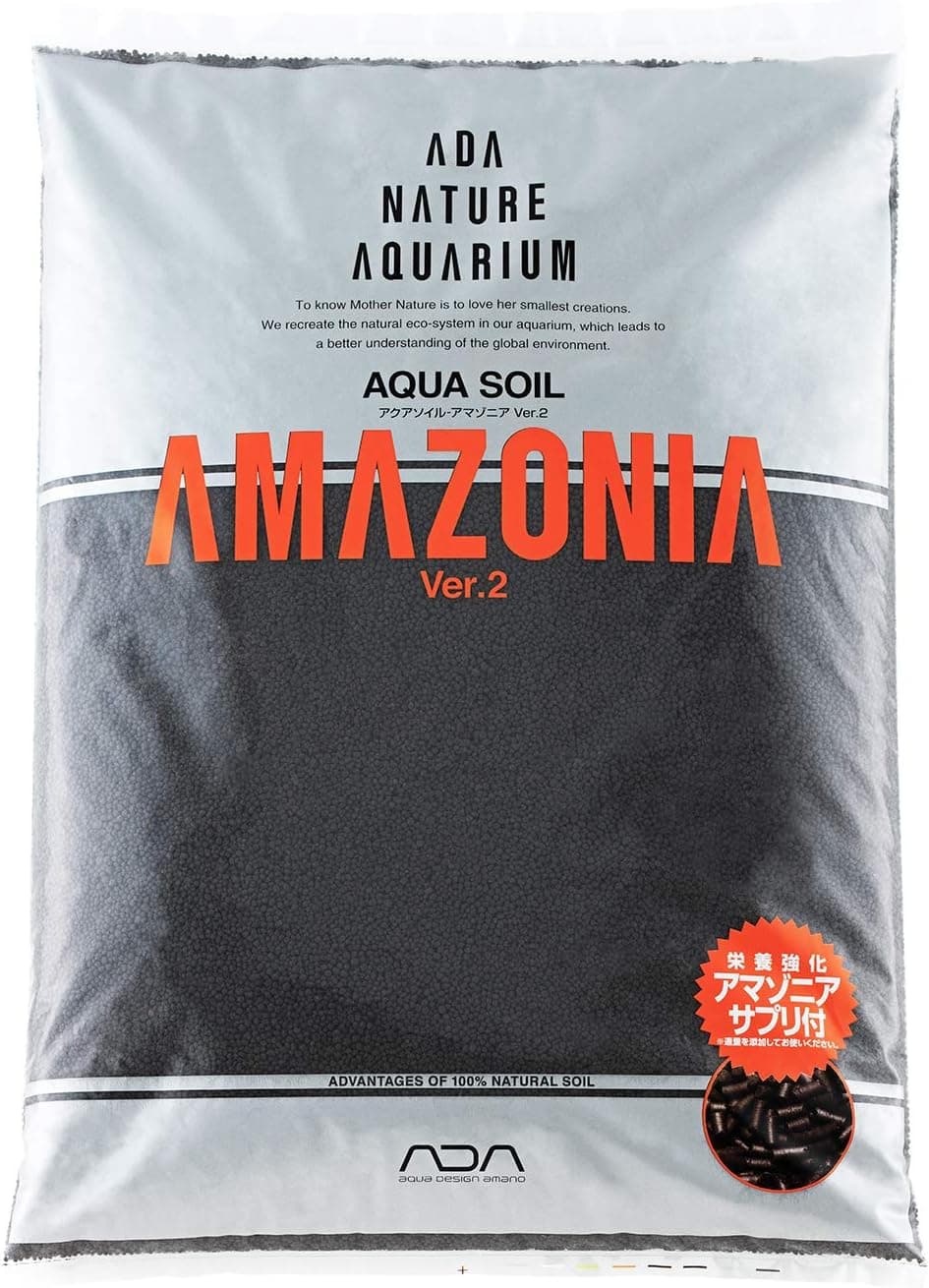
ADA Aqua Soil Amazonia Ver 2 in a 9L bag, a premium nutrient substrate for planted aquascapes.
Price range: See on Amazon
What we liked
- + Nutrient-rich soil supports strong root growth for carpets and stems
- + The 9L bag fills a mid-size aquascape with a proper sloped soil bed
- + ADA is the benchmark brand in nature aquariums
Trade-offs
- - Ammonia release in early weeks requires frequent water changes
- - Soil breaks down over time and eventually needs replacing
Who this aqua soil suits
This substrate is built for a planted tank owner running a genuine aquascape, whether that is a carpeted foreground, dense stem plants, or a full nature aquarium layout, since its nutrient content is aimed at supporting active root growth rather than just holding plants in place like inert gravel does. It particularly suits keepers of soft-water fish and shrimp, since the soil naturally lowers pH and softens water hardness as part of how it functions, which can simplify water prep for species that need those conditions. It is a less practical choice for a tank stocked with hard-water or alkaline-preferring fish, such as certain livebearers or African cichlids, where fighting the soil's natural water-softening effect would be counterproductive.
Composition and how it works
The soil is made from a natural black soil sourced as ADA's core raw material, fired into porous granules with an irregular shape and size that gives a natural, unrefined look rather than uniform pellets. A 9 liter bag weighs about 9 kilograms and is designed to be used alongside a separate Amazonia concentrate supplement, dosed at roughly 50 milliliters per 9 liters of soil and layered underneath the main substrate, which is intended to deliver organic nutrients to root zones without exposing them directly to the water column. The soil naturally reduces pH toward roughly 5.5 to 6.5 and softens water, working through natural mineral exchange rather than a temporary chemical treatment, and ADA does not recommend rinsing it before use.
Setting it up and living with it
Because this is an active, nutrient-rich soil rather than inert gravel, most tanks using it go through an early period of cloudiness and elevated ammonia as the soil begins breaking down and releasing nutrients, which typically calls for more frequent water changes during the first one to two weeks than a tank running inert substrate would need. Skipping the rinse step is intentional and recommended by ADA, since rinsing this soil can break down the granule structure rather than simply removing dust the way it would with gravel. Over months and years the granules gradually compact and break down, which is a normal part of the product's lifespan, and most aquascapers plan on a substrate refresh or full replacement every one to two years for a heavily used, actively growing planted tank.
Trade-offs and how it compares
Against ADA's own Powder Type version of Amazonia Ver 2, which uses smaller granules and scores slightly higher here, the standard Normal Type reviewed here gives easier water flow through the substrate bed, while the powder type is often chosen for finer carpeting plants that root more easily in smaller granules. Compared with ADA's New Amazonia, a related but distinct formulation, Ver 2 is generally considered a gentler, more moderate nutrient release that produces less dramatic ammonia spikes in the first weeks, making it a more forgiving choice for less experienced planted tank keepers. The core trade-off against any inert substrate like sand or plain gravel is maintenance: active soil demands more attentive water changes early on in exchange for noticeably stronger initial plant growth.
Verdict and who should choose an inert substrate
For an aquascaper building a genuine planted display and wanting a substrate with a long track record of strong results, ADA Aqua Soil Amazonia Ver 2 earns our score of 8.7 out of 10 as the benchmark product in its category. Fishkeepers stocking hard-water species that need stable, higher pH conditions should avoid it in favor of an inert substrate like sand or gravel paired with root tabs for nutrients instead. New planted tank owners should also go in expecting an adjustment period of cloudy water and extra water changes in the first couple of weeks, rather than treating early ammonia readings as a sign something has gone wrong.
Frequently asked questions
Does ADA Aqua Soil Amazonia need to be rinsed before use?
No, ADA specifically does not recommend rinsing this soil before use, since rinsing can break down the granule structure rather than simply clearing dust the way it would with plain gravel.
Why does the water go cloudy after adding ADA Aqua Soil?
The active soil releases nutrients and some ammonia as it begins breaking in during the first one to two weeks, which commonly causes temporary cloudiness that clears with normal filtration and water changes.
How long does ADA Aqua Soil last before it needs replacing?
Most aquascapers plan on refreshing or replacing the substrate roughly every one to two years in an actively growing planted tank, since the granules gradually compact and break down with use.
Does ADA Aqua Soil lower aquarium pH?
Yes, it naturally reduces pH toward roughly 5.5 to 6.5 and softens water hardness, which suits soft-water fish and plants but is not ideal for species that need harder, more alkaline water.
Prices change often, so check the current price and availability on Amazon.
Check price on AmazonAquascape Nest may earn a commission from the link above.