Blue Lake 100 Count Aquarium Plant Fertilizer Root Tabs BLtabs (Osmocote) Review (2026)
Updated September 20, 2026 · Research-based review
Our verdict
Blue Lake's BLtabs pack 100 Osmocote-based capsules that feed rooted plants through the substrate over roughly a month, vacuum sealed in batches to stay fresh. They fit any inert-substrate tank needing root fertilization, but Osmocote can cloud water if a tab breaks open, and tabs need regular replacing.
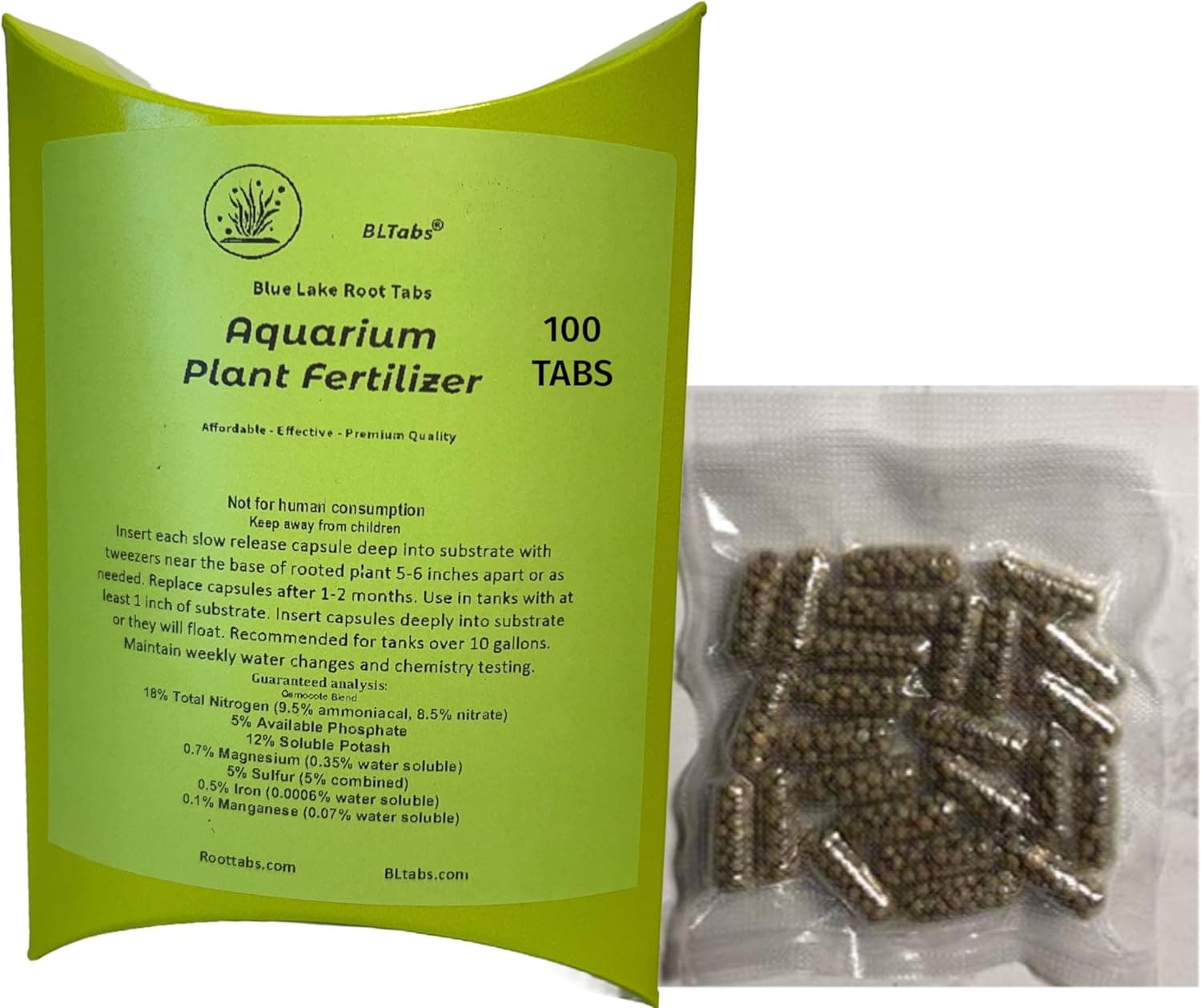
Blue Lake 100 Count BLtabs Osmocote root tabs, a slow-release fertilizer for rooted plants in inert substrates.
Price range: See on Amazon
What we liked
- + Osmocote-based tabs release nutrients slowly over time
- + The 100 Count pack supplies large tanks or multiple aquariums
- + Good choice for sand or gravel substrates without nutrients
Trade-offs
- - Osmocote can leach ammonia if tabs break open in the water
- - Tabs need regular replacing as nutrients deplete
Who these root tabs fit
Root tabs like these are built for keepers running sand, gravel, or other inert substrates that do not carry their own nutrient charge, since rooted plants such as swords, crypts, and bulb plants draw much of their food through their roots rather than the water column. This 100 count pack suits larger tanks, multiple tanks, or anyone who wants a long runway before reordering, since each capsule is meant to feed one planting site for about a month before it needs replacing. It is less relevant for tanks already running a nutrient-rich active substrate like aqua soil, where root feeding is largely already handled, or for tanks stocked mainly with floating or water-column feeding plants that do not benefit much from substrate-level fertilizer.
What is inside and how it works
According to the maker, Blue Lake's BLtabs use an Osmocote Plus base supplying nitrogen, phosphate, and potash alongside other micronutrients, packaged as slow-release capsules that are vacuum sealed in batches of 25 to keep moisture out before use. The slow-release design means nutrients leach out gradually over roughly a month rather than dumping everything into the substrate at once, which more closely matches how a rooted plant actually consumes food over time. Tabs are meant to be pushed several inches deep into the substrate with tweezers, close to the root zone of the target plant, spaced a few inches apart depending on planting density.
Using them without problems
Correct placement matters more than most people expect, since a tab pushed too shallow or left exposed at the substrate surface can break open and release a cloud of nutrients, including ammonia from the Osmocote coating, directly into the water column rather than staying locked in the substrate. That is a bigger concern in shrimp tanks or anything with sensitive livestock nearby. The maker recommends at least an inch of substrate depth and using them in tanks over 10 gallons, and replacing tabs after one to two months keeps a steady nutrient supply rather than letting beds run dry between doses.
How they compare with other root tabs
Within the root tab category, Blue Lake's own smaller 50 count and larger 200 count packs sit close in score, letting buyers match pack size to tank count rather than changing formula. ThriveCaps and Osmocote Plus branded tabs land in a similar range and use comparable release chemistry, while API's boxed tablets score lower in independent comparisons, often over less consistent release rates. The main differentiator across this category tends to be pack size and freshness handling like vacuum sealing rather than dramatic differences in the underlying Osmocote-based nutrient blend used across most brands.
Verdict and who should pick something else
This is a straightforward, well-priced option for anyone growing rooted plants in an inert substrate who wants a large supply of vacuum-sealed tabs without reordering constantly. The 100 count size hits a good middle ground between the smaller 50 count pack and the bulkier 200 count option for tanks of different sizes. Handle tabs carefully during planting to avoid breakage near sensitive livestock, and set a reminder to replace them every month or two since nutrients do deplete over time. Tanks already running an enriched active substrate, or keepers wanting a liquid all-in-one fertilizer instead of substrate dosing, should look elsewhere.
Frequently asked questions
How long does one Blue Lake root tab last?
The slow-release Osmocote formula is designed to feed a planting site for roughly a month before it needs replacing.
Are these safe for shrimp tanks?
They can leach ammonia if a tab breaks open near the substrate surface, so careful deep placement matters more in shrimp tanks.
Do I need active substrate if I use root tabs?
No, root tabs are meant for inert substrates like sand or gravel that do not already carry a nutrient charge.
How deep should root tabs be placed?
The maker recommends pushing them several inches into the substrate near the root zone, in tanks with at least an inch of substrate depth.
Prices change often, so check the current price and availability on Amazon.
Check price on AmazonAquascape Nest may earn a commission from the link above.