Clscea Aquarium CO2 Regulator Dual Pressure Gauge with Bubble Counter and Solenoid Valve Review (2026)
Updated September 14, 2026 · Research-based review
Our verdict
The Clscea regulator is a budget minded pick for planted tank owners who want a dual gauge, timer ready CO2 setup without spending on an established brand name. It delivers the core features well, but buyers should accept some uncertainty around long term parts support.
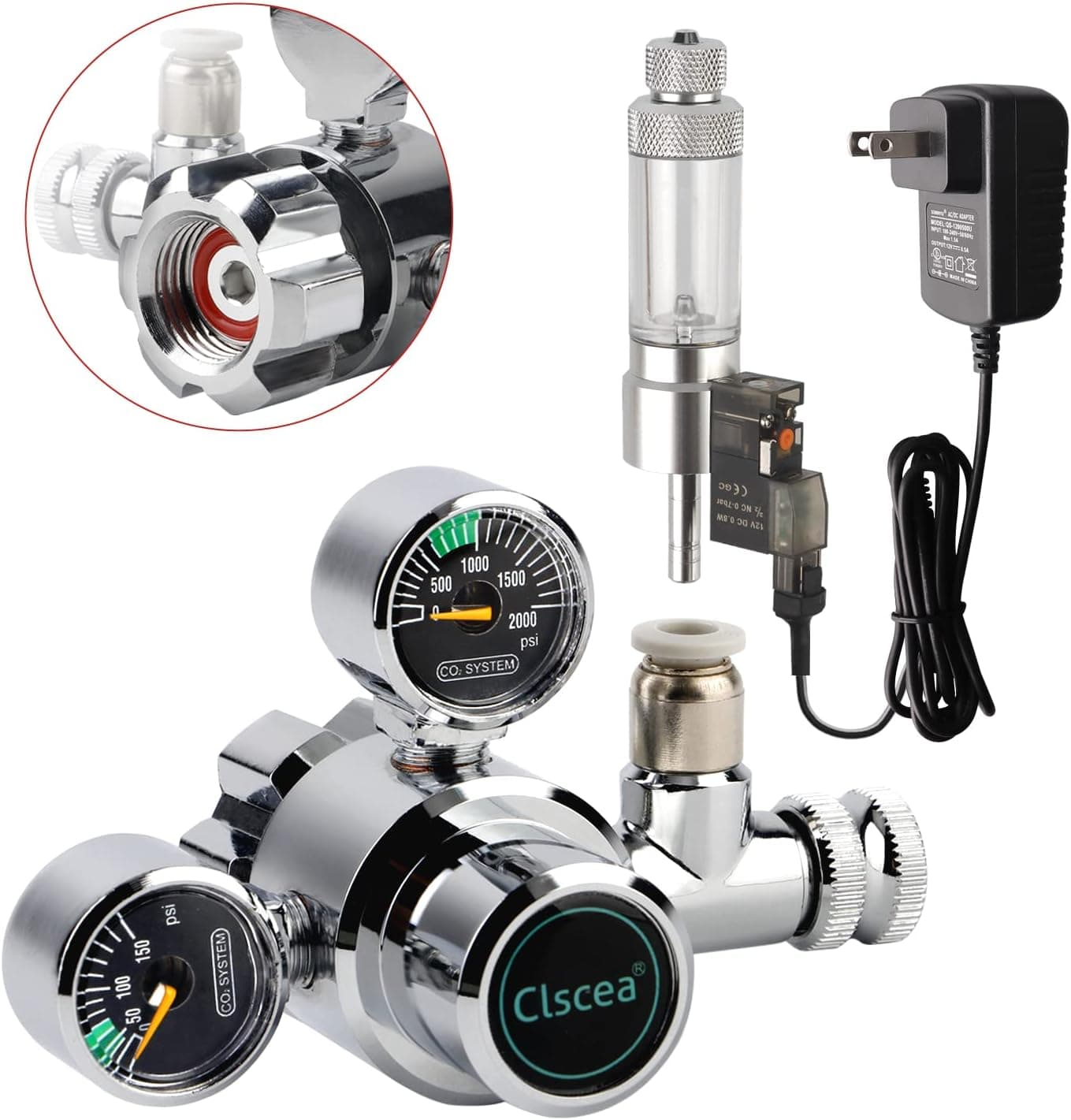
Clscea CO2 regulator with dual pressure gauge, bubble counter and solenoid valve, a budget injection regulator.
Price range: See on Amazon
What we liked
- + Dual pressure gauge tracks both cylinder and working pressure
- + Bubble counter lets you fine tune the CO2 injection rate
- + Solenoid valve allows automatic shutoff at night with a timer
Trade-offs
- - Lesser-known brand with limited track record
- - Needle valve precision may be coarser than premium regulators
Who this regulator is for
Clscea makes its CO2 regulator for hobbyists who want the full dual gauge, solenoid and bubble counter package at an accessible price point, without paying for a long established aquarium brand name. The regulator threads onto a standard CGA320 CO2 cylinder valve, matching the same full size cylinders used by most established regulator brands, and Clscea markets the fitting as a tool free handwheel connection rather than one that needs a wrench. That makes it a reasonable fit for a first time CO2 injector who wants to avoid extra tools during setup. It is less suited to anyone who specifically wants a recognized name brand with a long history of aquarium specific customer support, since Clscea is a newer, lesser known entrant in the CO2 regulator space compared with dedicated aquarium equipment makers.
Specs and design in plain terms
The regulator carries two separate gauges, one for reading remaining cylinder pressure and one for the working output pressure sent toward the tank, so you can track both cylinder life and delivery rate at the same time. Clscea describes the unit as rated up to 2000 PSI on the high pressure side, which covers a full CO2 cylinder even when freshly filled. The solenoid is a modular, removable design the maker calls a cool touch solenoid, built to run at a lower temperature than body heat so it stays comfortable to handle during long photoperiods. A fine tuning needle valve allows adjustment down to roughly one bubble every five seconds, and the attached bubble counter includes a check valve meant to stop aquarium water from being pulled back toward the cylinder if pressure drops.
Setting it up and living with it
Because the connection is described as a handwheel, tool free fitting, threading the regulator onto a CGA320 cylinder valve is meant to be a simple hand tightened job rather than one that needs a wrench or thread tape. From there, setup follows the usual pattern: run airline tubing from the bubble counter into a diffuser or atomizer, then wire the solenoid to a timer or CO2 controller so gas only flows during the lights on period. The modular solenoid can reportedly be swapped out on its own if it ever fails, which matters since the solenoid is typically the component most likely to wear out first in any CO2 regulator. Daily use mostly means glancing at the two gauges to confirm cylinder pressure is holding and the bubble count matches your target rate.
Trade-offs and how it compares
The biggest trade-off with the Clscea regulator is brand history. It has not built up the years of aquarium specific track record that companies like Inkbird or the dual stage focused JARDLI PRO-S1 have, so long term parts availability and support are less certain. The needle valve, while functional for fine dosing, is likely to feel slightly coarser in its adjustment than the needle valves on premium dual stage regulators, meaning very fine bubble count changes may take more trial and error. Against the similarly priced INKBIRDPLUS regulator just ahead of it in this lineup, Clscea offers a comparable dual gauge layout and a timer ready solenoid, but the INKBIRDPLUS carries the stronger brand reputation in the aquarium hobby specifically.
Verdict and who should look elsewhere
The Clscea regulator earns our score of 7.6 out of 10 as a capable, budget conscious way to start pressurized CO2 injection, with a genuinely useful dual gauge and modular solenoid design. It suits hobbyists comfortable trying a newer brand in exchange for a lower entry cost. Aquascapers who want the reassurance of a long established aquarium equipment maker, or who need the steadiest possible output on a demanding high tech planted tank, should look toward a dual stage regulator such as the JARDLI PRO-S1 or a more established single stage option like the INKBIRDPLUS instead.
Frequently asked questions
Does the Clscea regulator need tools to install?
Clscea describes the CGA320 connection as a handwheel, tool free fitting, so it is designed to be hand tightened onto the cylinder valve without a wrench.
What pressure is the Clscea CO2 regulator rated for?
The maker lists it as rated up to 2000 PSI on the high pressure side, which covers the pressure of a full standard CO2 cylinder.
Can the solenoid be replaced if it fails?
The solenoid is a modular, removable part, so it can reportedly be swapped without replacing the entire regulator, which helps with long term upkeep.
Is Clscea a well known aquarium brand?
No, it is a newer, lesser known brand compared with established aquarium equipment makers, so buyers should weigh the lower price against a shorter track record.
Prices change often, so check the current price and availability on Amazon.
Check price on AmazonAquascape Nest may earn a commission from the link above.