iPower 24 Hours Outlet Timer, Plug in Timer for Aquarium Light, AC 1725W 1/2 HP Review (2026)
Updated September 20, 2026 · Research-based review
Our verdict
This iPower mechanical outlet timer runs aquarium lights or small pumps on a fixed daily schedule using simple trip pins rather than menus, and it is rated for AC 1725W and 1/2 HP so it comfortably handles typical lighting loads. The dial ticks audibly and steps only in 15-minute increments.
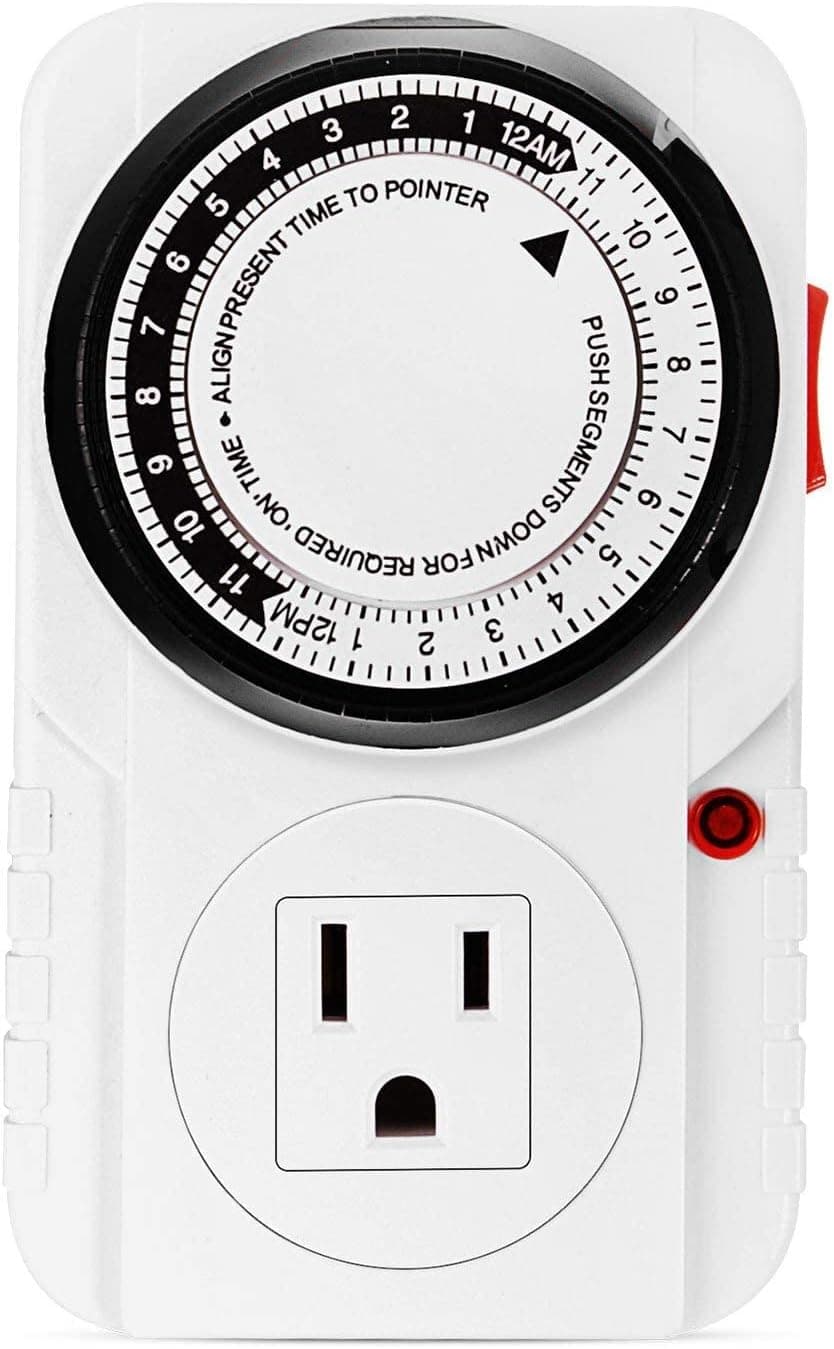
iPower 24 Hours plug in outlet timer rated AC 1725W and 1/2 HP, a mechanical timer for aquarium lights and pumps.
Price range: See on Amazon
What we liked
- + Mechanical dial is simple to set with no menus
- + Rated AC 1725W and 1/2 HP, so it handles lights and small pumps
- + Keeps your photoperiod steady with no battery to die
Trade-offs
- - Mechanical dial ticks audibly in a quiet bedroom
- - Timing steps are coarser than digital timers
Who this timer fits
This timer suits keepers who want a dead-simple way to run an aquarium light or small circulation pump on the same schedule every day without programming a digital interface or worrying about a backup battery holding the correct time. Setting it involves pushing trip pins around a 24 hour dial rather than navigating menus, which makes it approachable for anyone who just wants consistent on and off times without learning a new device. It also suits keepers in areas with occasional short power blips, since a mechanical timer generally keeps its time-of-day setting through a brief outage in a way that a digital timer without battery backup cannot. Keepers who want more complex schedules, such as different on and off times on different days, or the finer control of minute-level scheduling, will find a digital timer's programmability a better match.
Capacity and what it handles
The timer is rated for AC 1725 watts and 1/2 horsepower, a rating that comfortably covers the electrical draw of typical aquarium lighting fixtures and small pumps, which usually pull well under that ceiling individually. That headroom means the timer can also run a light and a small air pump or circulation pump together on the same outlet without approaching its rated limit, useful for keepers who want to consolidate multiple low-draw devices onto one scheduled outlet. It is a single outlet timer, so running more than one device from it requires a power strip plugged into the timer, which is a common setup but worth planning for before purchase. The 1/2 HP rating specifically signals it can also handle small motorized loads like a compact pump, not just resistive loads like lighting.
Living with a mechanical dial
Mechanical timers like this one work by physically rotating a dial that trips a switch as pins set around its edge pass a trigger point, and that internal mechanism produces an audible ticking sound as it turns throughout the day. In a living room or fish room that ticking usually goes unnoticed, but placed in a bedroom or other quiet space it can become a distraction for light sleepers, a tradeoff worth considering based on where the timer will sit. Scheduling is limited to 15 minute increments, since that is the smallest interval the physical pins support, which is precise enough for a consistent daily lighting photoperiod but coarser than a digital timer capable of minute-level adjustments. There is no battery to fail and no programming to lose in a power outage beyond the timer needing its dial re-synced to the correct time of day.
How it compares with digital timers
Against digital outlet timers from brands like BN-LINK, NICREW, and Fosmon, which offer programmable multi-day schedules with several on and off events and similarly high wattage ratings around 1875W and 15A, this iPower timer gives up scheduling flexibility in exchange for mechanical simplicity and no battery dependency. Keepers who want an identical schedule every single day with zero programming get that reliably from a mechanical timer, while anyone wanting different weekday and weekend schedules, gradual dimming features, or very fine timing control needs one of the digital alternatives instead. The audible ticking is a genuine difference from silent digital timers and is worth testing in the intended room if noise sensitivity is a concern.
Verdict and who should pick something else
This timer earns strong value as a straightforward, no-programming way to automate an aquarium light or small pump on a fixed daily schedule, backed by a 1725W and 1/2 HP rating with plenty of headroom for typical aquarium loads. It fits keepers who want reliability and simplicity over flexibility and are not bothered by a mechanical tick or 15 minute scheduling steps. Choose a digital timer instead for varying daily schedules, silent operation in a bedroom setting, or finer control over exact on and off minutes. For a single consistent daily photoperiod, this mechanical timer does the job with little to go wrong.
Frequently asked questions
What is the maximum wattage this timer can handle?
It is rated for AC 1725 watts and 1/2 horsepower, enough headroom for typical aquarium lights and small pumps.
Does the timer tick audibly?
Yes, the mechanical dial makes an audible ticking sound as it rotates through the day, which can be noticeable in a quiet bedroom.
What is the smallest time increment it can be set to?
The dial's trip pins allow scheduling in 15 minute increments, coarser than a digital timer's typically finer control.
Does this timer keep its schedule during a power outage?
As a mechanical timer it has no battery to lose settings, though a longer outage will throw off its time-of-day sync and require resetting the dial.
Prices change often, so check the current price and availability on Amazon.
Check price on AmazonAquascape Nest may earn a commission from the link above.