LANDEN Red Lava Stones (16lbs, 3~10inch, 11pcs) Aquarium Rock for Aquascaping Review (2026)
Updated September 14, 2026 · Research-based review
Our verdict
LANDEN's red lava stones suit aquascapers building a warm-toned nature or Iwagumi-style layout who want porous rock that anchors moss and epiphytes well. The reddish tone adds contrast against green plants, but the rough surface can snag fins on bettas, and the color will not suit every plant and fish palette.
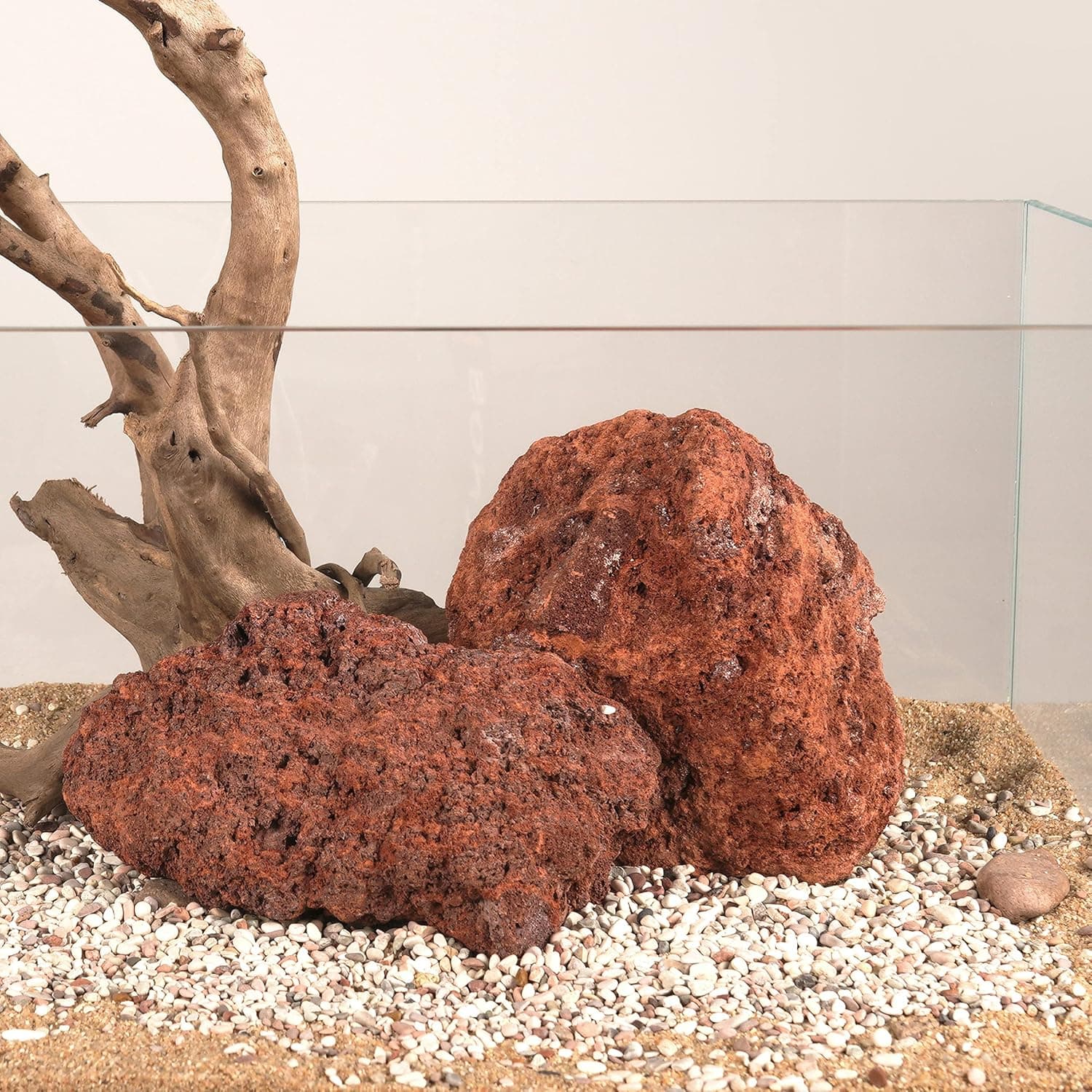
LANDEN red lava stones at 16lbs with 11pcs from 3~10inch, a warm-toned porous rock set for aquascaping.
Price range: See on Amazon
What we liked
- + Red tone adds warmth to natural aquascape designs
- + Eleven pieces cover multiple sizes for complete layouts
- + Porous stone anchors moss, bucephalandra and other epiphytes well
Trade-offs
- - Red color may clash with some plant and fish color schemes
- - Rough texture can snag delicate fins on bettas and long-finned fish
Who these lava stones suit
This set is aimed at aquascapers who want a natural rock with real textural interest rather than smooth river stone, since the porous, pitted surface of lava rock is a distinct visual departure from polished hardscape material. The warm red tone works well for a layout leaning into contrast, where the rock's color plays off deep green mosses and ferns, making it a fit for a nature aquarium or a rock-forward Iwagumi-inspired design. It is a less obvious choice for a tank with red or orange fish and plants already in the palette, where the red stone could compete with rather than complement the existing color scheme, and for tanks with long-finned or delicate fish that could catch on the rough texture.
Material properties and what is included
The set includes eleven pieces ranging from about 3 to 10 inches, totaling roughly 16 pounds, giving enough variety in size to build a layered arrangement with larger anchor stones and smaller accent pieces. Lava rock is volcanic in origin and naturally porous, which gives it a large internal surface area relative to its weight and makes it a good home for beneficial bacteria that support the nitrogen cycle, functioning as a secondary biological filter in addition to its role as hardscape. The stone is described as pH inert and stable in water, meaning it should not noticeably raise hardness or shift pH the way some limestone-based rocks can, which matters for keepers targeting soft, slightly acidic water for plants and certain fish.
Setting it up and living with it
Because pieces vary naturally in shape and finish, some with a flatter polished base and others more irregular, it is worth dry-fitting an arrangement before committing to substrate placement, since achieving a stable stacked look with porous rock can take some trial and error. Rock this porous benefits from a rinse before use to clear loose grit from the surface, and many aquascapers attach anubias, bucephalandra, or moss directly to the stone using thread or glue, since the rough surface actually helps these epiphytes grip and establish rhizomes over time. Over months of use, the pores can accumulate algae and mineral deposits, which some owners consider part of the natural aging look of a lava rock layout rather than a flaw to scrub away.
Trade-offs and how it compares
Against LANDEN's own black lava stone set, which scores higher here, the choice mostly comes down to whether a layout calls for a warm or neutral rock tone, since both share the same porous texture and roughly similar size range. Compared with FISCAPE's black lava rock sold in fewer, larger pieces, this LANDEN set's eleven-piece count gives more flexibility for building varied elevation and grouping smaller accent stones around larger anchors. The main trade-off with any lava rock, red or black, is texture: the same roughness that helps moss and bacteria establish is also what can nick soft fins, so tanks with bettas or long-finned livebearers need thoughtful placement away from open swimming lanes.
Verdict and who should choose differently
For an aquascaper wanting warm-toned, porous rock that doubles as a bacteria-friendly hardscape base, this LANDEN set earns our score of 8.3 out of 10, reflecting strong marks for fit and features. Anyone building a tank around cooler tones or wanting a rock color that blends rather than contrasts should look at the black lava version instead, which shares the same properties in a more neutral shade. Keepers of long-finned fish should plan hardscape placement carefully or lean toward smoother stone types, since the rough, porous surface that makes lava rock great for biofilm and moss is the same quality that can be rough on delicate fins.
Frequently asked questions
Does red lava rock raise aquarium water hardness or pH?
Lava rock is generally described as pH inert and stable, meaning it should not meaningfully raise hardness or shift pH, unlike limestone-based rocks that can leach minerals into the water.
Can beneficial bacteria grow on lava rock?
Yes, the porous, pitted surface of lava rock gives it a large internal surface area that supports colonization by nitrifying bacteria, functioning as extra biological filtration alongside its role as hardscape.
Is lava rock safe for betta fish with long fins?
Lava rock's rough, porous texture can snag delicate or long fins, so betta keepers should position pieces away from open swimming areas or choose a smoother rock type instead.
How many pieces come in the LANDEN 16lb red lava rock set?
The set includes eleven pieces ranging from roughly 3 to 10 inches in size, giving enough variety to build a layered arrangement of larger anchor stones and smaller accents.
Prices change often, so check the current price and availability on Amazon.
Check price on AmazonAquascape Nest may earn a commission from the link above.