How to Start a Planted Aquarium
Published How we research

Starting a planted aquarium is one of the most rewarding ways to get into the hobby, but the number of choices can feel overwhelming at first. The good news is that a healthy planted tank comes down to a handful of fundamentals: a stable environment, decent light, nutrients for the plants, and patience while everything settles in. Get those right and the rest becomes tuning rather than troubleshooting.
Products from this article
The highest-scoring picks from the buying guides this article links to. Scores are our editorial assessment, not customer ratings.
+ The 8 On/Off programs allow split photoperiods and siesta schedules
From our guide: Best Aquarium Light Timers and Controllers (2026)
+ Filter and LED arrive together, so the tank can be cycled soon after unboxing
From our guide: Best Aquarium Kits for Planted Tanks (2026)
+ Glass lid reduces evaporation and keeps jumping fish and shrimp inside
From our guide: Best Aquarium Lids and Covers for Planted Tanks (2026)
+ The 7 Day programming lets you run different schedules across the week
From our guide: Best Aquarium Light Timers and Controllers (2026)

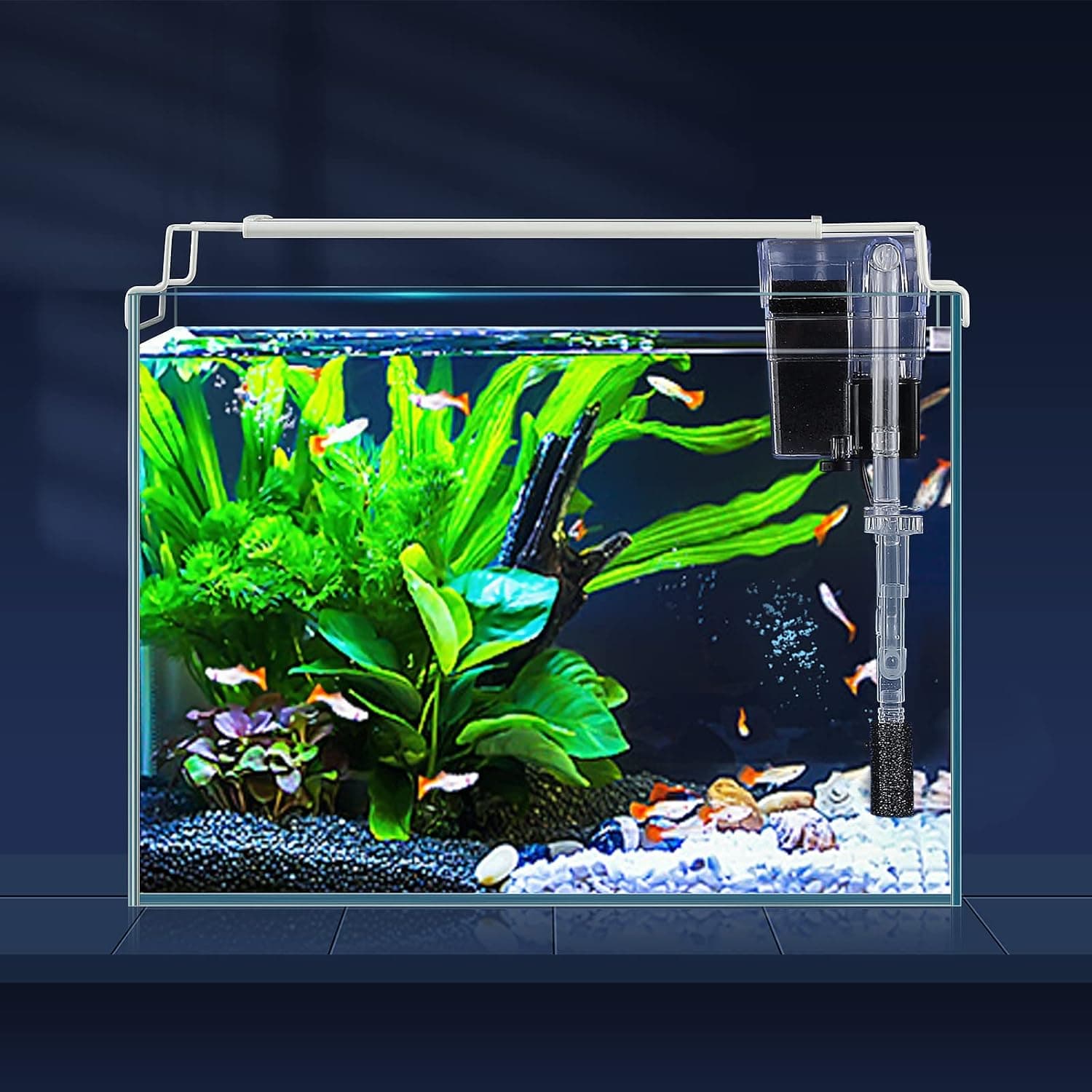


Begin by choosing a tank you have room for and can commit to maintaining. Larger volumes are more forgiving because water parameters swing more slowly, so a tank in the range of fifteen to thirty gallons is often easier for a beginner than a tiny desktop cube. Place it on a level, sturdy surface away from direct sunlight and heating vents, and make sure you have easy access to a power outlet and a water source nearby.
Next, plan your layout before anything gets wet. Decide roughly where you want your hardscape (rocks and driftwood), where taller background plants will go, and where you want open space for fish to swim. Sketching a simple design saves you from constantly uprooting plants later. A nutrient-rich substrate for the planting zones, topped or bordered with inert sand or gravel where you prefer, gives roots something to grab and feed on.
Once the tank is aquascaped and filled, resist the urge to add fish immediately. You need to cycle the tank first, which means establishing the beneficial bacteria that convert fish waste into less harmful compounds. During this period your plants can begin adjusting, and you can dial in your lighting photoperiod and any fertilizer dosing. Test your water regularly so you know exactly when the tank is ready.
When the cycle is complete and parameters read stable, add livestock slowly and in small groups. Overstocking early is a common mistake that leads to water-quality crashes and stressed fish. Introduce a few hardy animals first, watch how the system responds over a week or two, and only then continue building toward your final stocking plan.
Finally, settle into a simple routine of weekly water changes, gentle trimming, and observation. The best aquarists are the ones who look closely and respond to what the tank is telling them. Give it time, keep your maintenance consistent, and your planted aquarium will mature into a stable, beautiful ecosystem.
Popular right now
- Best Clip-On Aquarium Lights for Planted Tanks (2026)Buying guide
- Best Nano Aquariums for Planted Tanks (2026)Buying guide
- Best Low-Iron Glass Tanks for Aquascaping (2026)Buying guide
- Best CO2 Regulators for Planted Tanks (2026)Buying guide
- Best Full-Spectrum Grow Lights for Planted Tanks (2026)Buying guide
- Best CO2 Tubing for Planted Tanks (2026)Buying guide
Based on the last 28 days of search and visitor data.