Aquarium Plant Root Fertilizer Tabs 40 Count Review (2026)
Updated September 20, 2026 · Research-based review
Our verdict
This unbranded 40 count pack of root fertilizer tabs offers a low-cost way to feed root-hungry plants like swords and crypts through the substrate. The small cube tabs are easy to push near roots and the count covers a small tank for months, but the listing gives no brand name and nutrients can leak out if a tab is not buried deep enough.
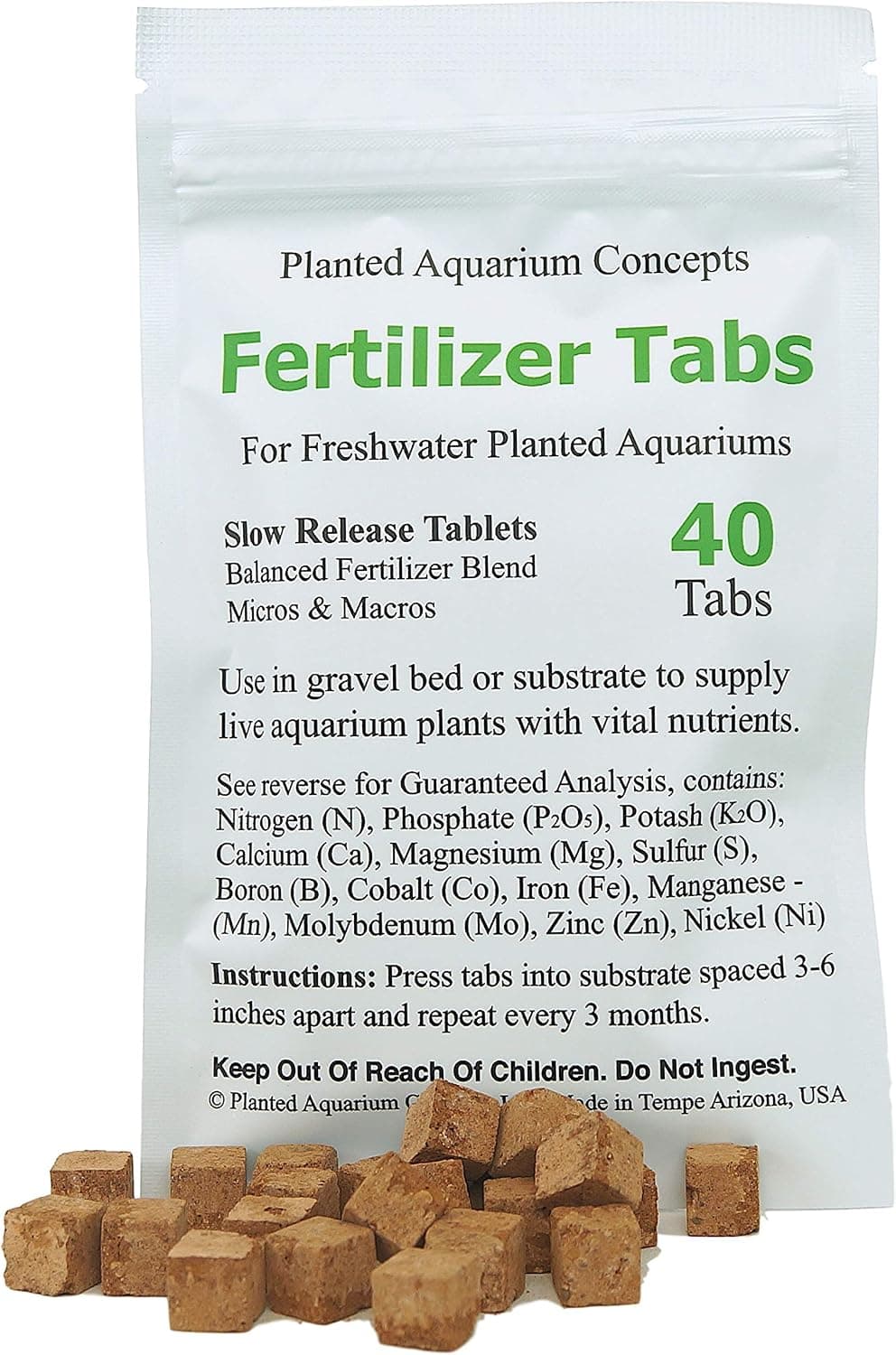
Aquarium plant root fertilizer tabs in a 40 Count pack, a simple root feed for swords, crypts and other root feeders.
Price range: See on Amazon
What we liked
- + The 40 Count pack covers several months of tabs in a small tank
- + Root tabs feed plants through the substrate where they need it most
- + Easy to push into gravel or sand near plant roots
Trade-offs
- - Basic root tabs, so nutrient strength may differ from premium brands
- - Tabs can leak nutrients into water if not buried deep
Who these root tabs fit
These root tabs are aimed at planted tank keepers growing root feeding plants such as sword plants, crypts, and other species that draw most of their nutrition through their roots rather than the water column. A 40 count pack is enough for several months of feeding in a smaller tank, since tabs are typically replaced every few weeks near each plant rather than all at once. They suit budget-conscious keepers who want a straightforward substrate fertilizer without paying for a named brand, and anyone supplementing an inert substrate like plain gravel or sand that offers no nutrition on its own. Keepers who prefer a fully documented, brand-name product with a longer track record and clearer dosing guidance may want to look elsewhere first.
What each tab contains and provides
According to the listing, each tab is roughly a one centimeter cube weighing about 0.68 grams, formulated with a nutrient blend that includes nitrogen, phosphate, and potash along with micronutrients such as iron and manganese. That combination targets the macro and micronutrients root-feeding plants pull from the substrate, similar in concept to other root tab products on the market, though the exact percentages and sourcing are less documented than with established brands. The tabs are meant to be pressed into the substrate near the base of a plant's root system, where they slowly release nutrients as they dissolve rather than dumping fertilizer into the water column all at once, which helps limit algae growth compared with heavy liquid dosing.
Using the tabs and what to watch for
The tabs should be pushed deep into the substrate, close to the root ball of the target plant, with spacing adjusted anywhere from three to six inches apart depending on how densely a tank is planted. Pushing them in shallow or too close to the surface risks nutrients leaking out into the water column before the plant can use them, which can feed algae rather than the plants it was meant for, so a deeper placement near mature roots gives better results. Because the packaging does not carry a recognizable brand name, buyers get less transparency on manufacturing standards than with a known fertilizer maker, so it is worth watching plant response over the first few weeks rather than assuming the formulation matches a name-brand tab exactly.
How it compares with named root tab brands
Against established competitors like Blue Lake's BLtabs or Osmocote Plus root tabs, this unbranded pack is priced to compete on cost rather than documentation, since brands like Blue Lake publish clearer nutrient ratios and have a longer history in the hobby. Osmocote Plus in particular is a coated slow-release fertilizer originally built for terrestrial gardening that many aquascapers repackage for aquarium use, giving it a track record this generic product cannot match. For keepers who want the cheapest way to try root tabs before committing to a larger multi-year supply, this pack is a reasonable entry point, but anyone dosing a serious high-tech planted tank long term will likely get more consistent results from a documented brand.
Verdict and who should pick something else
This pack works as an inexpensive way to feed root-hungry plants for a keeper who wants to try root tabs without committing to a bigger, pricier brand-name order first. Pick it for a small to medium planted tank on a budget, and bury tabs deep near plant roots to avoid nutrient leakage into the water column. Choose a documented brand like Blue Lake or Osmocote Plus instead if consistent nutrient content, manufacturer transparency, or a larger count for bigger tanks matters more than upfront price, since those established options publish clearer formulation details and dosing guidance.
Frequently asked questions
How many tabs come in this pack?
The pack contains 40 tabs, enough for several months of feeding depending on how many plants and how large the tank is.
What nutrients do the tabs contain?
The listing states each tab includes nitrogen, phosphate, and potash along with micronutrients such as iron and manganese, packed into a small cube roughly one centimeter across.
How deep should the tabs be buried?
They should be pushed deep into the substrate near a plant's root ball; shallow placement risks nutrients leaking into the water column instead of feeding the roots.
Is this a recognized fertilizer brand?
No, the listing does not carry a well-known brand name, so buyers get less documentation than with established root tab makers like Blue Lake or Osmocote.
Prices change often, so check the current price and availability on Amazon.
Check price on AmazonAquascape Nest may earn a commission from the link above.