FISCAPE 6.1-8.1 Inches Natural Black Lava Rock, 4 PCS Large Aquarium Rocks Review (2026)
Updated September 14, 2026 · Research-based review
Our verdict
This FISCAPE set of four large black lava rocks, each roughly 6.1 to 8.1 inches, suits aquascapers who want a few bold focal stones rather than a full bulk box. The porous surface takes moss and ferns well, but four pieces alone rarely fill a big layout.
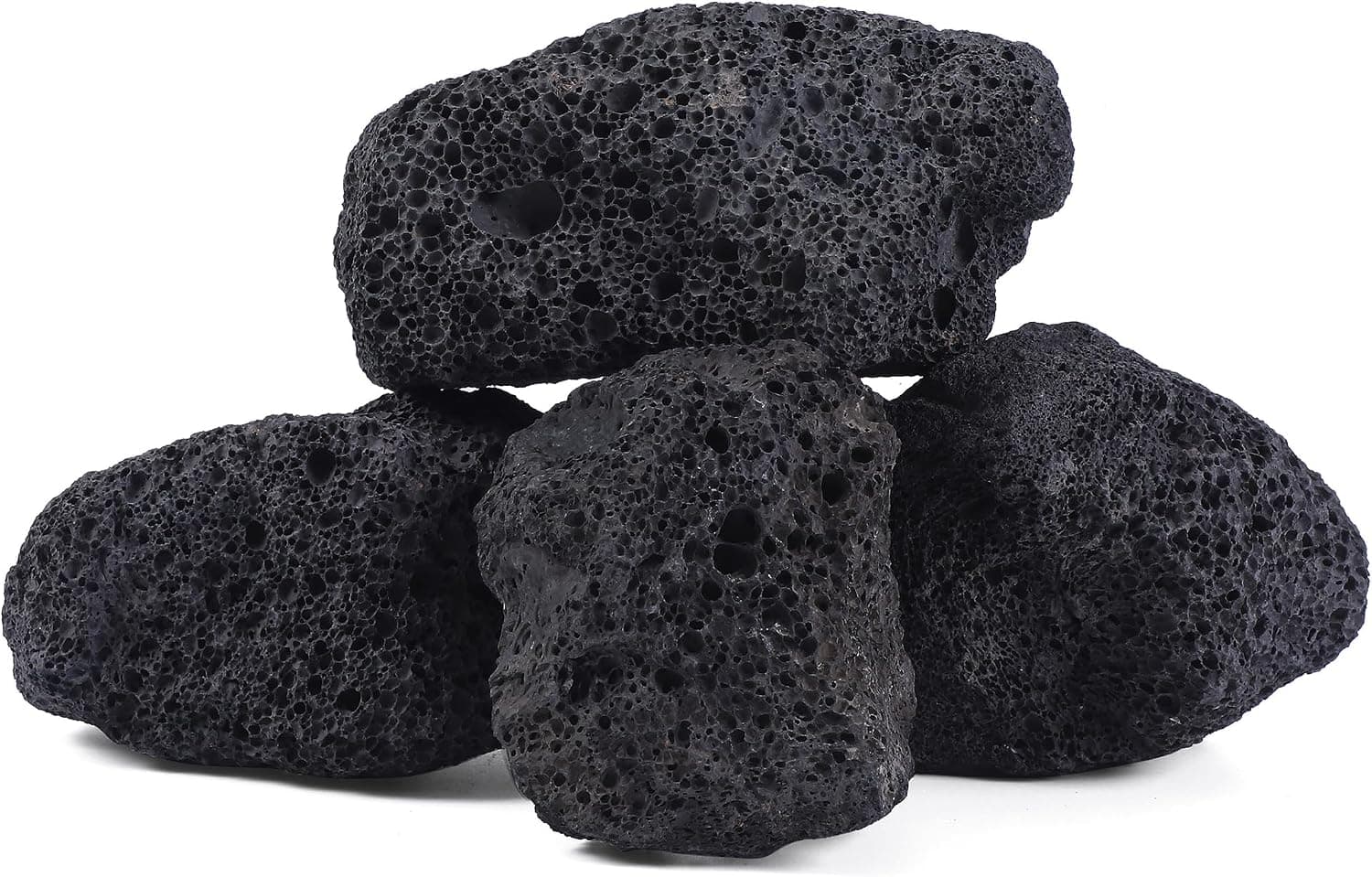
FISCAPE natural black lava rock set of 4 PCS in 6.1-8.1 Inches, large porous stones for bold hardscapes.
Price range: See on Amazon
What we liked
- + Large 6.1-8.1 Inches stones create strong focal points
- + Porous texture makes plant attachment easy
- + Curated pieces save time compared with sorting through a bulk rock box
Trade-offs
- - Four stones may not fill larger layouts without extra filler rock
- - Heavy focal stones need secure placement
Who this rock set is for
FISCAPE's large black lava rock set targets aquascapers building a hardscape around a small number of dramatic stones rather than dozens of small pieces. Each of the four rocks measures roughly 6.1 to 8.1 inches, which is big enough to work as a standalone centerpiece in a mid-size planted tank or as the tallest point in an island or mountain-style layout. Because you only get four stones, this set fits keepers who already have a design in mind and just need one or two anchor pieces, or who plan to combine this box with smaller lava rock or other hardscape material for filler. Someone hoping to fill a large tank from a single box, or who wants dozens of uniform small stones for a gravel-style scatter, will find four large pieces too limiting and should look at a bulk bag instead.
What you actually get: size, texture and material
The rocks are natural black lava, a volcanic stone that is porous rather than smooth, so the surface is full of small pits and channels instead of a glassy finish. That texture is what lets moss, java fern and anubias be tied on with thread or glue, since roots and rhizomes can grip into the pores instead of sliding off a flat rock. Lava rock is also inert, meaning it does not dissolve into the water column or push pH and hardness in one direction the way crushed coral or some limestone-based rocks can, so it is considered safe alongside soft-water plants and shrimp as well as harder-water fish. Because each piece is a natural formation rather than a molded product, expect noticeable variation between the four stones: some will show more visible striping and pitting than others, and edges can be sharper on one piece than the next.
Setting it up and living with it
Before anything goes into the tank, rinse each rock under running water to clear dust and loose grit left over from quarrying and packaging, since lava rock's porous surface holds onto fine particles more than a smooth river stone would. Run a hand over the edges first. Natural lava can fracture with sharp points, and a light pass with sandpaper on any obvious edge is worth the few minutes before it sits near shrimp or delicate fins. Once placed, the rock needs no ongoing care beyond normal tank maintenance. It will not break down, so there is no need to replace or recondition it over time, and if algae builds up on the surface it can be scrubbed with a brush during a routine water change. Owners doing aquascaping with plants attached to the rock should expect moss and ferns to take a few weeks to visibly root into the porous face.
Trade-offs and how it compares with named rivals
The clearest trade-off is quantity. Four stones, even large ones, leave gaps in anything wider than a standard 20 to 40 gallon footprint, so larger tanks usually need a second box or a mix of smaller lava rock to avoid a sparse look. Compared with LANDEN's black and red lava stone sets, which ship roughly 11 pieces across a wider 3 to 10 inch range for a similar aquascaping budget, the FISCAPE box gives fewer but larger individual stones, which suits a minimalist layout better than a busy one. Against a bagged option like SubstrateSource's crushed lava gravel, this set is built for structure and height rather than substrate coverage, so the two solve different problems. Anyone weighing which lava rock to buy should think about whether the goal is a handful of sculptural anchor pieces, which is what this box does well, or broad coverage across a larger footprint, which favors a bigger multi-piece set.
Verdict and who should pick something else
For a keeper who wants two or three commanding lava stones to build a layout around, without sorting through a bulk box of mismatched rubble, this FISCAPE set does the job cleanly and the porous surface rewards anyone planning to attach moss or ferns. It is not the right pick for a large tank that needs a rock to run wall to wall, or for a keeper who wants a big pile of uniform small stones for a naturalistic scatter look. Budget for a second set or complementary filler material if the tank is much larger than a nano or small community setup, and always give the stones a hand check for sharp edges before they go in with shrimp or long-finned fish. Treated as accent pieces rather than a complete hardscape kit, the set delivers on what a small, curated lava rock box is meant to do.
Frequently asked questions
Will FISCAPE lava rock change my aquarium's pH?
No. Lava rock is chemically inert, so it will not raise or lower pH or hardness the way limestone or coral-based rocks can, making it safe to combine with soft-water plants and shrimp.
Do I need to boil or soak the rocks before use?
A thorough rinse under running water to remove dust and loose grit is enough. Boiling is not required for lava rock, though a quick check for sharp edges is worth doing first.
How many of these rocks do I need for a standard 20 gallon tank?
One box of four large stones can anchor a 20 gallon layout on its own, but most keepers add a second box or smaller lava rock as filler to avoid a sparse look.
Can moss and plants be attached directly to the rock?
Yes. The porous surface holds thread, fishing line or cyanoacrylate glue well, and moss or ferns typically root into the pitted face within a few weeks.
Prices change often, so check the current price and availability on Amazon.
Check price on AmazonAquascape Nest may earn a commission from the link above.