Black Beard Algae in a Planted Tank: What Causes It and How to Get Rid of It
Published How we research
Black beard algae (BBA) in a planted tank is almost always a sign of unstable or low CO2 combined with poor flow, and high organic waste makes it worse. You get rid of it by fixing those causes first, then killing what is already there with spot treatments and by removing the worst leaves, because the tufts do not disappear by themselves even after conditions improve. BBA is a red algae, not a true black one: it grows as dense dark gray to black tufts on slow-growing leaves, leaf edges, hardscape, filter pipes and equipment, and it holds on so tightly that wiping does almost nothing.
Products from this article
The highest-scoring picks from the buying guides this article links to. Scores are our editorial assessment, not customer ratings.
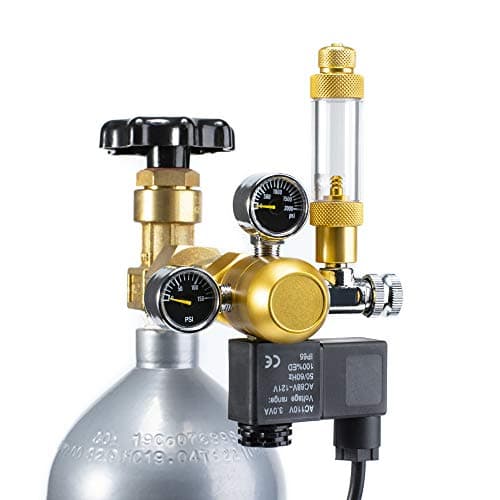
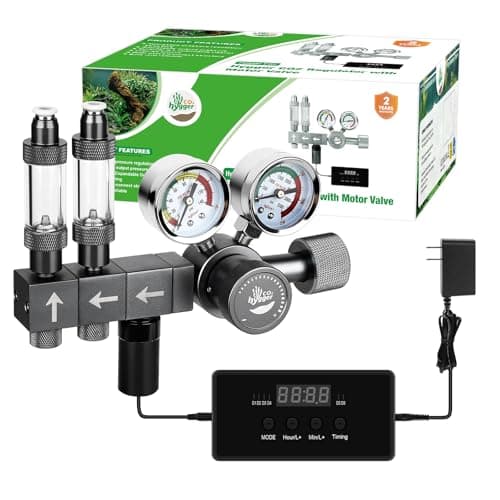
+ Dual stage regulation with a main valve for output pressure and an integrated needle valve for flow
From our guide: Best CO2 Regulators for Planted Tanks (2026)
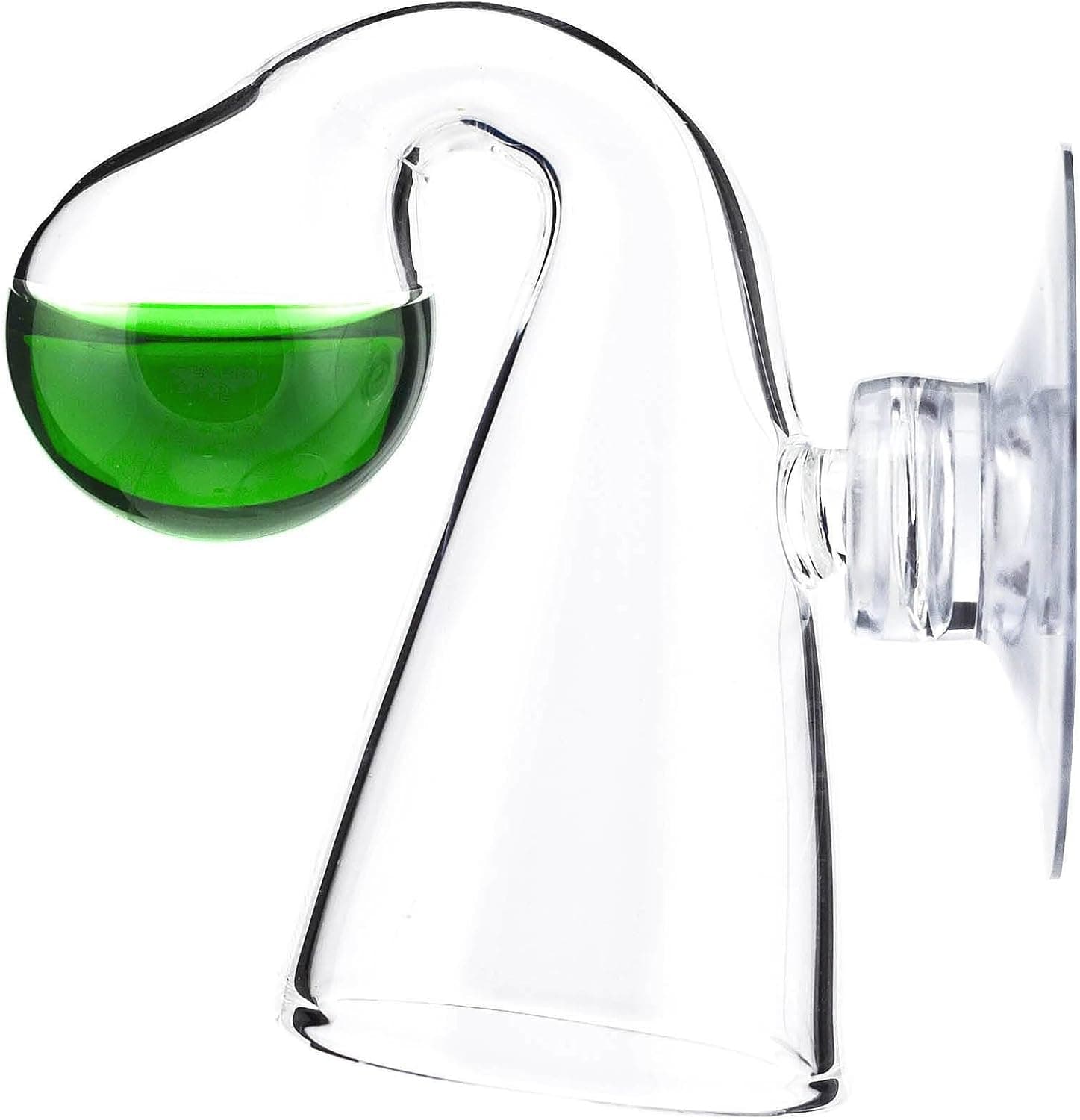
+ The 4dkh reference solution gives more accurate readings than tap water fills
From our guide: Best CO2 Drop Checkers for Planted Tanks (2026)
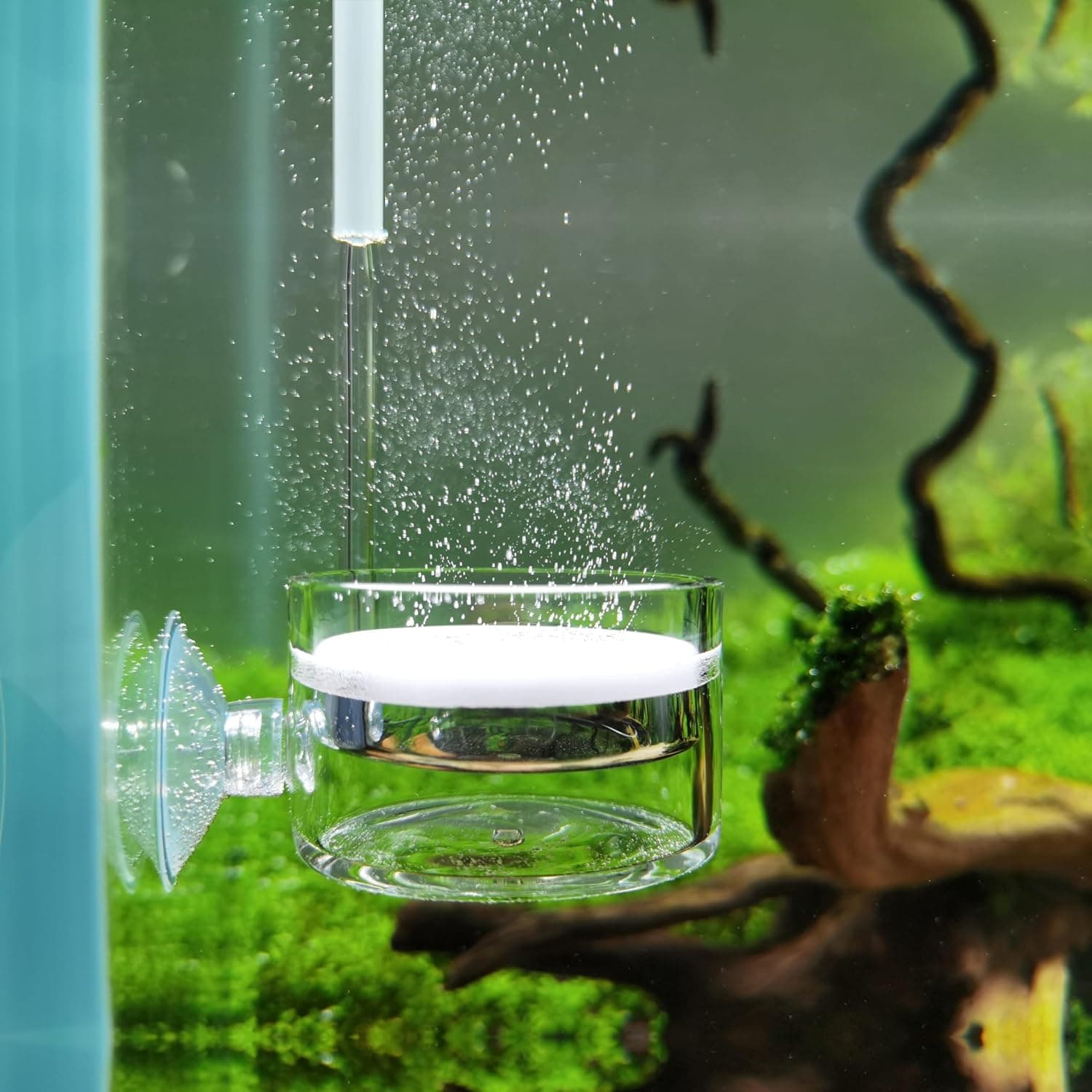
+ Pollen glass disc produces fine CO2 mist for efficient dissolving
From our guide: Best CO2 Diffusers for Planted Tanks (2026)
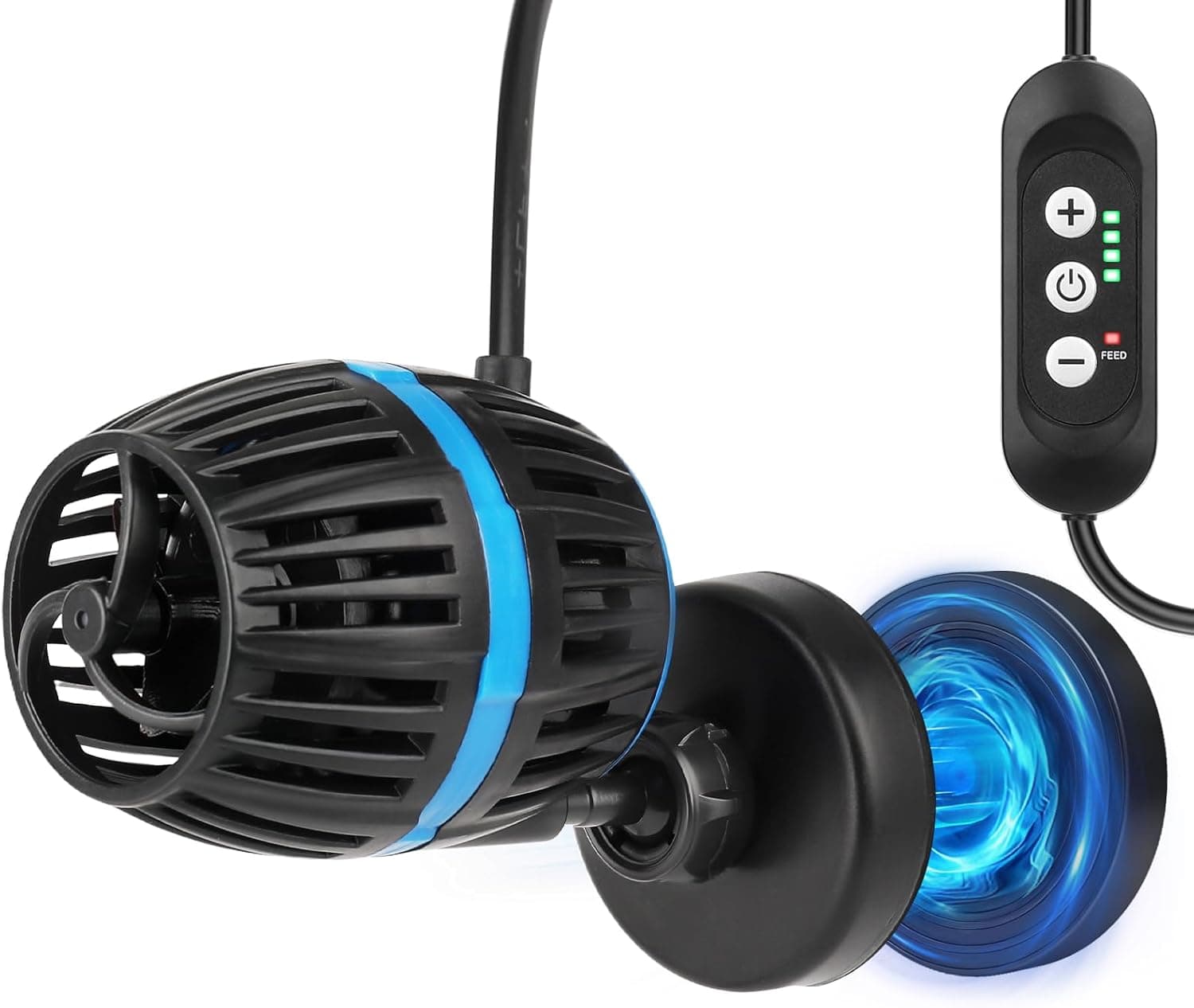
+ DC 12V motor with external controller allows smooth speed adjustment
From our guide: Best Powerheads for Planted Tanks (2026)
How to recognize black beard algae
BBA forms short, stiff tufts a few millimeters to about a centimeter long, usually dark gray, black or a dull olive color. It starts at the edges of old leaves on slow growers such as Anubias, Java fern, Bucephalandra and older Cryptocoryne leaves, and on the rough surfaces of wood and stone. It also loves the outflow and intake pipes, the heater and the rim of the tank where flow is strong but CO2 swings the most.
The easiest way to tell it from other dark algae is touch and color under treatment. BBA is firmly anchored and feels rough, while staghorn algae is branched like small antlers and usually grayer, and diatoms or brown algae wipe off with a finger. When you spot treat BBA with liquid carbon, it turns pink or red within a day or two, then white or pale before it falls off or gets eaten. That color change is a reliable confirmation that you are dealing with a red algae.
What causes it: CO2 swings, flow and waste
The most common trigger in planted tanks is CO2 that is too low or not stable through the photoperiod. Plants that cannot get steady carbon slow down, and BBA takes advantage. This happens in injected tanks when the bubble rate drifts as the cylinder empties, when the CO2 turns on too late so the first hours of light run short, or when a cheap regulator suffers end-of-tank dump. It also happens in low-tech tanks that get stronger light than the natural CO2 level can support.
Flow is the second piece. Dead spots behind hardscape and in dense plant groups collect detritus and get less CO2 and nutrients, while the area right in front of the outflow sees big swings. A filter that has slowed down because the media is clogged makes both problems worse, so a dirty canister is a frequent hidden cause.
Organic waste completes the picture: overfeeding, rotting leaves, infrequent water changes and an old, mulm-heavy substrate all feed algae. BBA is rarely caused by one factor alone, so plan to check CO2, flow and maintenance together rather than changing just one thing.
Fix the cause first: CO2 and lighting
If you inject CO2, use a drop checker with 4 dKH reference solution and aim for lime green by the time the lights come on. Blue means too little CO2, yellow means too much. Turn the CO2 on one to two hours before the lights so the level is already up when photosynthesis starts, and keep the bubble rate steady rather than chasing it every day. A dual-stage regulator or a single-stage unit with a working solenoid and a fine needle valve keeps the rate more stable as the cylinder pressure falls.
Check that the diffuser is clean and placed where the flow carries the fine mist across the tank, usually low and under or near the outflow. A diffuser coated with biofilm produces large bubbles that escape to the surface instead of dissolving.
For low-tech tanks, the fix is usually to reduce the light rather than add CO2. Lower the intensity, raise the fixture or shorten the photoperiod; many keepers run 6 to 8 hours of light in a tank with BBA problems. A light timer keeps that schedule exact every day, which matters more than most people expect.
Improve flow and cut organic waste
Look at how plants and debris move. Every part of the tank should show at least a gentle sway in the stems, and detritus should not settle in the same corners every week. If the filter output looks weaker than when it was new, clean the prefilter sponge, the impeller and the hoses before blaming the filter size. If the layout simply blocks flow, a small powerhead or wavemaker aimed along the back glass can carry water and CO2 into the dead zones.
On the waste side, feed less, remove melting or dying leaves as soon as you see them and keep a regular water change schedule. A weekly change of 30 to 50 percent is common practice in planted tanks with algae issues, and vacuuming the open areas of the substrate during the change removes the mulm that feeds algae. Rinse mechanical filter media in old tank water rather than tap water so the bacteria survive.
Kill existing BBA: spot treating and removal
Fixing the causes stops new growth, but existing tufts usually stay. The standard method is spot treatment with a liquid carbon product based on glutaraldehyde. Turn off the filter and any powerhead, draw the product into a syringe without a needle and squirt it slowly onto the tufts from close range, then wait about 10 to 15 minutes before restarting the flow. Keep the total amount used within the dose the bottle gives for your tank volume, because Vallisneria, some mosses and Riccia are known to react badly to liquid carbon and shrimp are sensitive to overdoses.
Hydrogen peroxide (the 3 percent drugstore kind) is the other common spot treatment and works the same way: filter off, syringe close to the algae, short wait. Use small amounts, since too much harms fish, shrimp and the bacteria in the filter, and avoid it entirely on delicate plants. With either product, the algae should turn red or pink within a few days.
Manual removal speeds things up. Trim the worst affected leaves of slow growers at the base, since a leaf covered in BBA will not recover. Scrub equipment such as pipes and heaters outside the tank, and take stones out to scrub them with a stiff brush. For hard surfaces outside the tank, many keepers use a dilute bleach soak followed by a thorough rinse and dechlorinator; never use bleach inside the aquarium.
Algae eaters that help
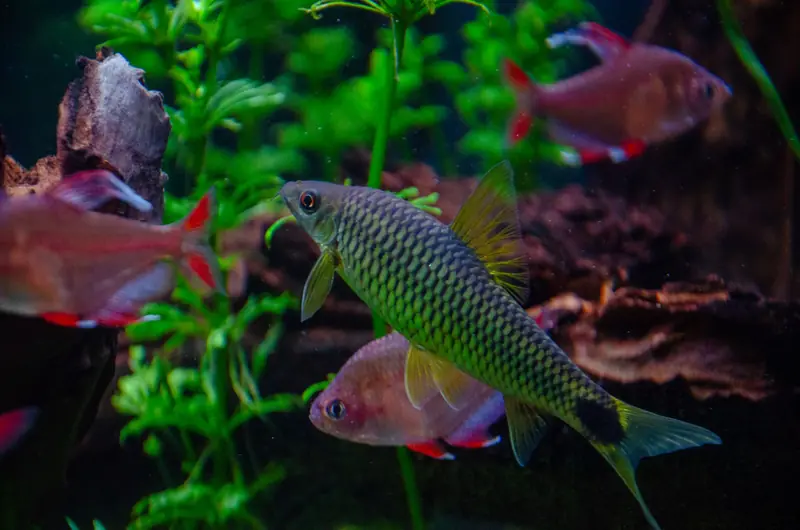
True Siamese algae eaters (Crossocheilus oblongus) are the fish most often credited with eating BBA, mainly while young, and they need a reasonably large tank as they grow to around 6 inches. Make sure you buy the real species, since several look-alikes are sold under the same name and do not eat BBA. Amano shrimp and some nerite snails pick at it too, especially once spot treatment has weakened and softened the tufts.
Treat livestock as cleanup help, not as the cure. If CO2, flow and waste stay unchanged, BBA grows faster than any fish or shrimp can eat it. Glass and acrylic can be cleaned with a blade scraper, which takes off the tufts that grow along the silicone and rim.
Frequently asked questions
Is black beard algae harmful to fish? No. It does not poison fish or shrimp. The harm is to plants, because it covers leaves and blocks light, and to the look of the tank. It is also a useful warning that CO2 or flow is not where it should be.
Why did BBA appear after I started injecting CO2? Usually because the CO2 level is not stable, not because CO2 causes algae. Low injection, a late start before the lights, or a drop as the cylinder empties all create the swings BBA likes. Check the drop checker at lights-on and at the end of the photoperiod.
How long does it take to get rid of BBA? Spot-treated tufts usually change color within a few days and disappear over one to two weeks. Clearing a whole tank takes several weeks of repeated treatment, trimming and stable conditions.
Can I just raise the liquid carbon dose for the whole tank? Overdosing the whole tank is how sensitive plants melt and shrimp die. Spot treating targets the algae with a fraction of the total dose and is the safer approach.
Popular right now
- Best Clip-On Aquarium Lights for Planted Tanks (2026)Buying guide
- Best Nano Aquariums for Planted Tanks (2026)Buying guide
- Best Low-Iron Glass Tanks for Aquascaping (2026)Buying guide
- Best CO2 Regulators for Planted Tanks (2026)Buying guide
- Best Full-Spectrum Grow Lights for Planted Tanks (2026)Buying guide
- Best CO2 Tubing for Planted Tanks (2026)Buying guide
Based on the last 28 days of search and visitor data.