How to Choose an Aquarium Heater
Published How we research
Match heating capacity in watts to your tank volume, erring higher for chilly rooms, and consider running two smaller heaters instead of one large one so a single failure is less catastrophic. Submersible heaters positioned horizontally low in the tank give even heat distribution, and an adjustable thermostat with reliable shutoff is essential. Place the heater near good water flow, like a filter outflow, to avoid warm pockets. Reliability matters most since heaters can fail stuck-off or stuck-on; redundancy with two heaters or a separate thermostat controller guards against this. Always confirm actual temperature with an independent thermometer. For most tropical fish and plants, a reliable heater is not optional; it keeps your tank at a stable temperature and protects your livestock from the stress of fluctuations, especially in rooms that cool down at night or in winter. Choosing the right heater is mostly about matching it to your tank and prioritizing reliability, since a failed heater can harm a whole tank quickly.
Products from this article
The highest-scoring picks from the buying guides this article links to. Scores are our editorial assessment, not customer ratings.
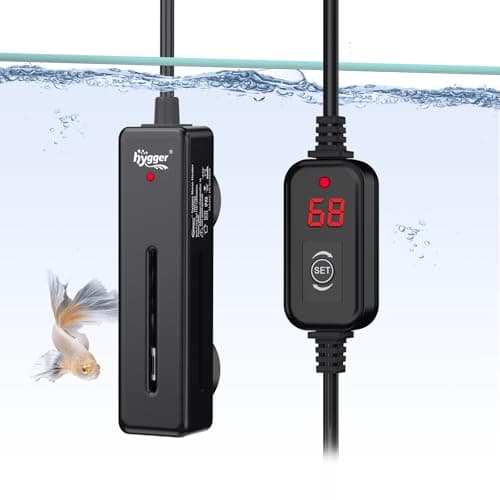
+ External controller sets the temperature and shows the current water temperature on a digital display
From our guide: Best Aquarium Heaters for Planted Tanks (2026)
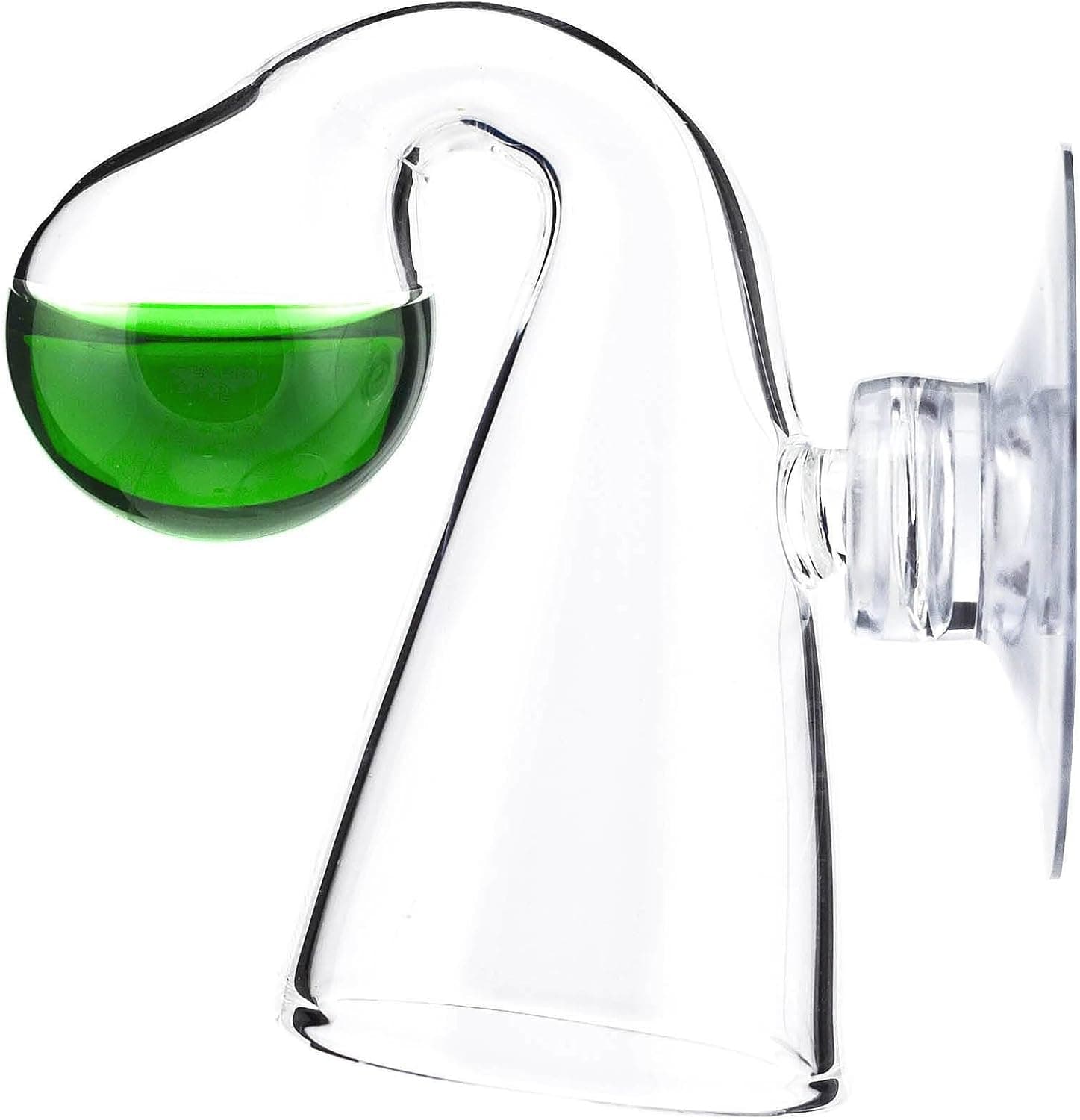
+ The 4dkh reference solution gives more accurate readings than tap water fills
From our guide: Best CO2 Drop Checkers for Planted Tanks (2026)
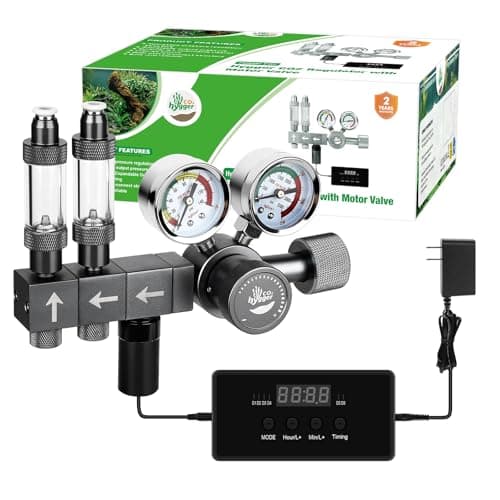
+ Dual stage regulation with a main valve for output pressure and an integrated needle valve for flow
From our guide: Best CO2 Regulators for Planted Tanks (2026)
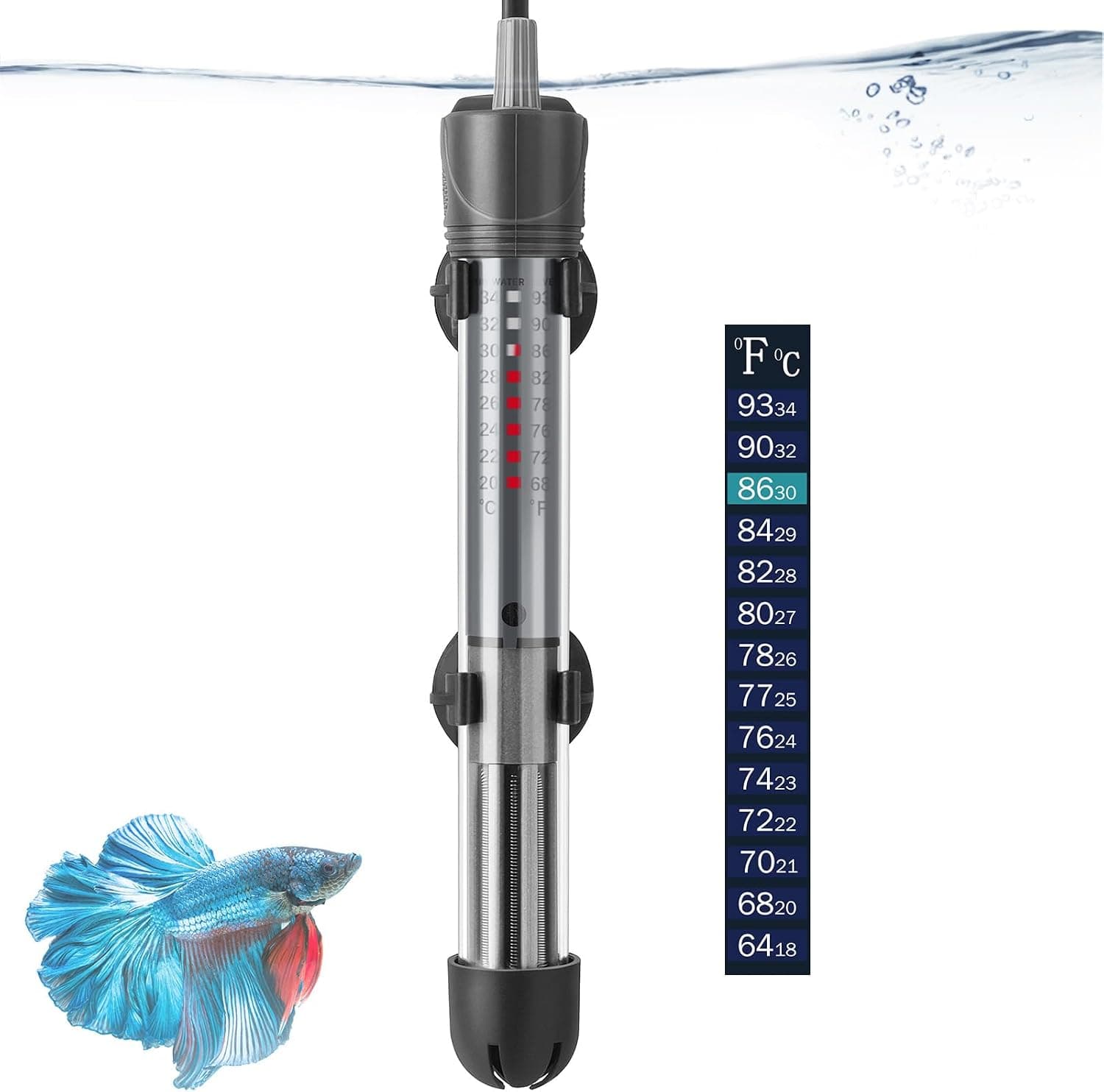
+ The 25W output is sized for 5-10Gal tanks without big temperature swings
From our guide: Best Aquarium Heaters for Planted Tanks (2026)
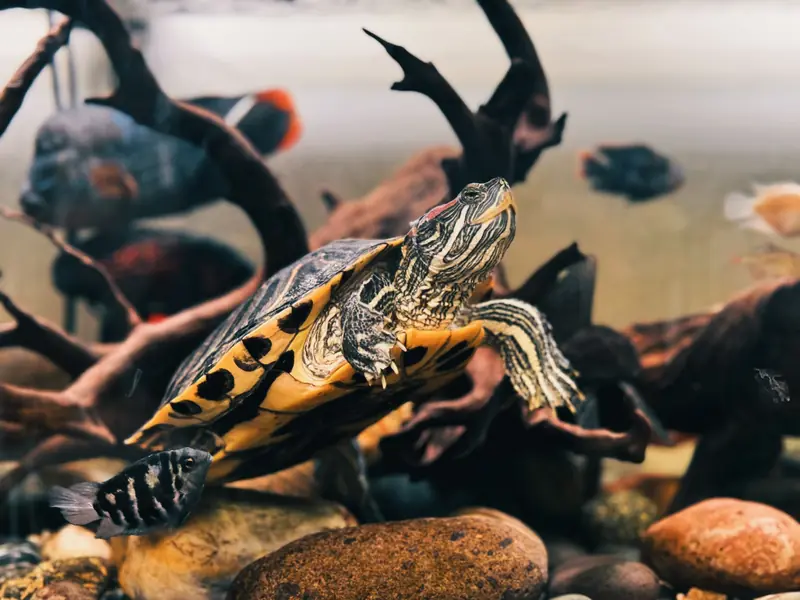
Match heating capacity to your tank volume
The first consideration is heating capacity, which is measured in watts and should be matched to your tank volume. A common rule of thumb is to provide a few watts of heating per gallon of water, with larger and colder-room tanks needing proportionally more. If your tank sits in a chilly room, err on the higher side, and for larger tanks many aquarists run two smaller heaters instead of one large one so that a single failure is less catastrophic.
Common heater types and features to look for
There are a few common heater types to consider. Submersible heaters are fully immersible and can be positioned horizontally low in the tank for even heat distribution, which makes them the popular default. Whatever type you choose, an adjustable thermostat is essential so you can set your target temperature precisely, and a model that reliably switches off when the target is reached protects against dangerous overheating.
Placement affects how well a heater performs
Placement affects how well a heater performs. Position it near good water flow, such as close to the filter outflow or a powerhead, so the heated water is distributed evenly throughout the tank rather than forming a warm pocket. Even distribution means no cold spots for fish and a more accurate reading, which keeps the whole tank comfortable and stable.
Reliability matters more than any single feature
Reliability matters more than any single feature, because heaters are among the aquarium components most likely to fail, and they can fail in two dangerous ways: stuck off, letting the tank go cold, or stuck on, cooking the tank. This is why redundancy with two heaters is popular, and why many aquarists add a separate thermostat controller as a safeguard against a heater that sticks on.
Always confirm with an independent thermometer
Whatever heater you buy, always confirm the actual water temperature with a separate, trusted thermometer rather than relying solely on the heater's dial. Check it regularly so you catch a malfunction before it becomes a crisis. A properly sized, well-placed, reliable heater paired with an independent thermometer is a small investment that quietly protects everything living in your tank.
Frequently asked questions
How many watts of heater does my aquarium need? A common rule of thumb is a few watts of heating per gallon of water, with larger tanks and colder rooms needing proportionally more, erring on the higher side if the room is chilly.
Why do some aquarists use two heaters instead of one? Running two smaller heaters instead of one large one means a single failure is less catastrophic, providing redundancy against a heater sticking on or off.
Where should an aquarium heater be placed? Near good water flow, such as close to the filter outflow or a powerhead, so heated water distributes evenly throughout the tank rather than forming a warm pocket.
Should I trust my heater's built-in thermometer? No, always confirm the actual water temperature with a separate, trusted thermometer rather than relying solely on the heater's dial, checking regularly to catch a malfunction before it becomes a crisis.
Popular right now
- Best Clip-On Aquarium Lights for Planted Tanks (2026)Buying guide
- Best Nano Aquariums for Planted Tanks (2026)Buying guide
- Best Low-Iron Glass Tanks for Aquascaping (2026)Buying guide
- Best CO2 Regulators for Planted Tanks (2026)Buying guide
- Best Full-Spectrum Grow Lights for Planted Tanks (2026)Buying guide
- Best CO2 Tubing for Planted Tanks (2026)Buying guide
Based on the last 28 days of search and visitor data.