Iwagumi Aquascaping
Published How we research
Iwagumi is one of the most elegant and disciplined styles in aquascaping, built entirely around the arrangement of stones. The word comes from a Japanese term referring to a rock formation, and the style reduces a layout to its purest elements: a small number of carefully placed stones, a simple carpet of plants, and open, uncluttered space. It looks effortless, which is exactly why it is so hard to do well.
Products from this article
The highest-scoring picks from the buying guides this article links to. Scores are our editorial assessment, not customer ratings.
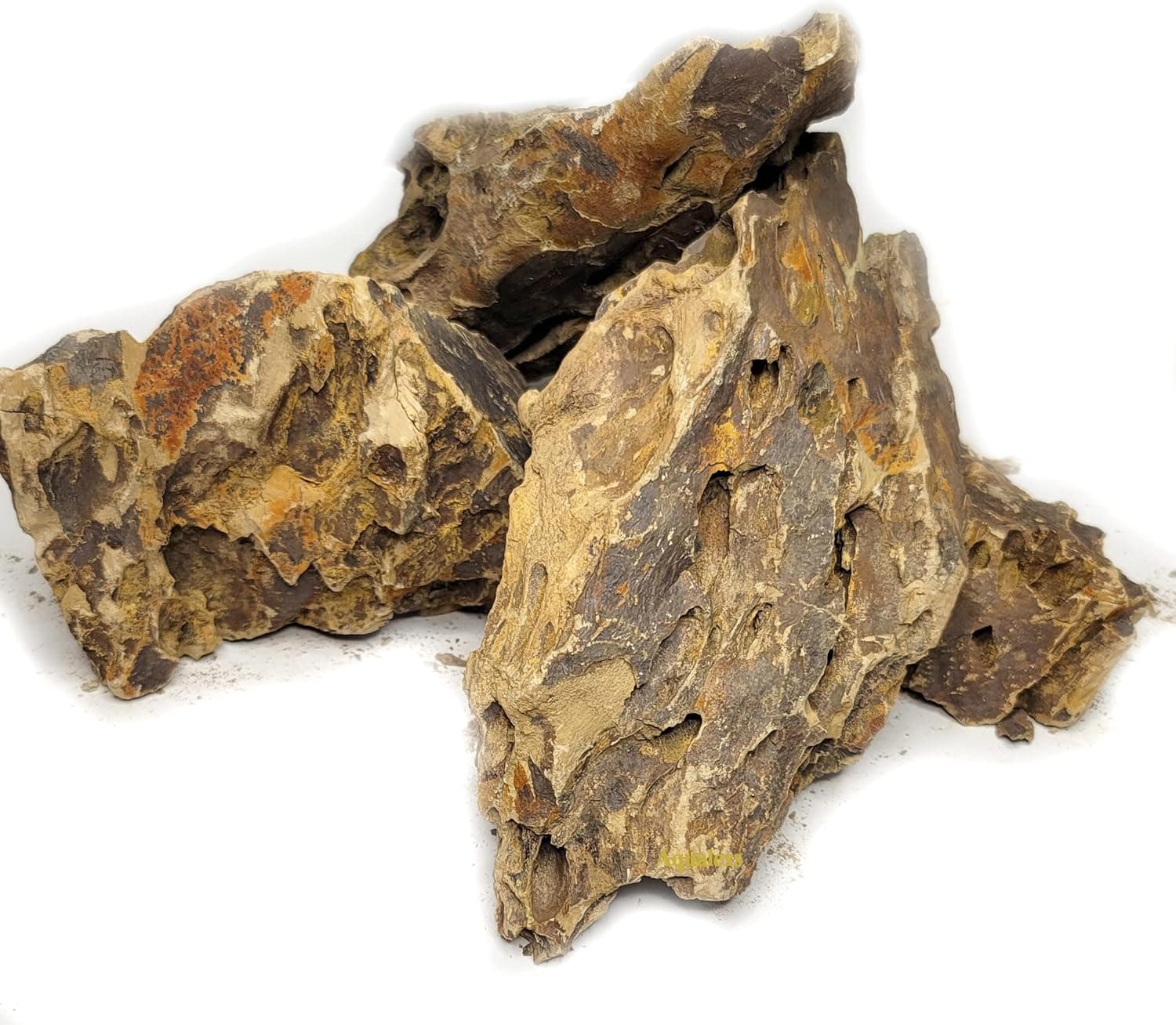
+ The 20 LBS pack provides enough rock for large layouts
From our guide: Best Dragon Stone for Aquascaping (2026)
+ Pieces ranging 3~11 inches provide main, secondary and accent stones
From our guide: Best Seiryu Stone for Aquascaping (2026)
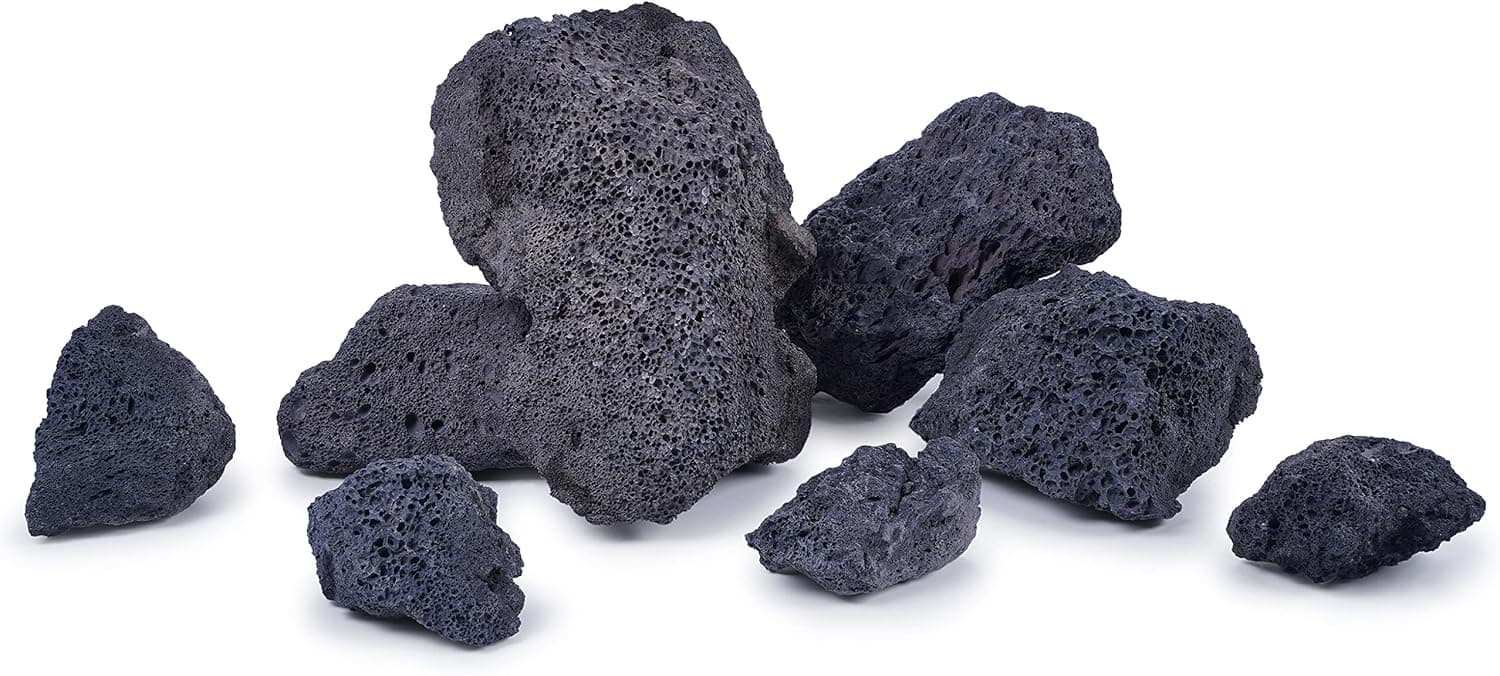
+ Porous surface is ideal for attaching mosses and epiphytes
From our guide: Best Lava Rock for Aquascaping (2026)
+ Ohko dragon stone texture adds dramatic detail to hardscapes
From our guide: Best Dragon Stone for Aquascaping (2026)
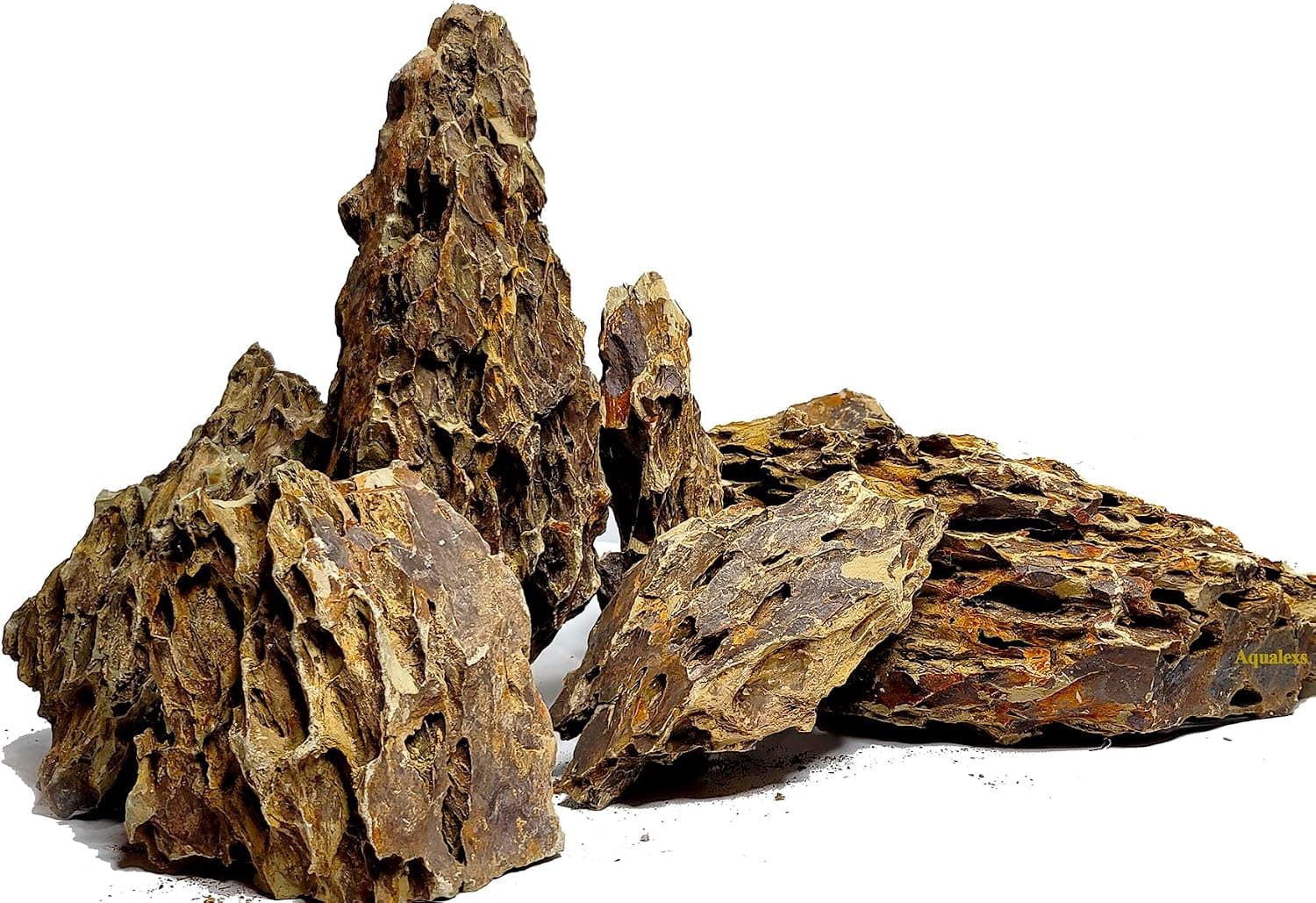
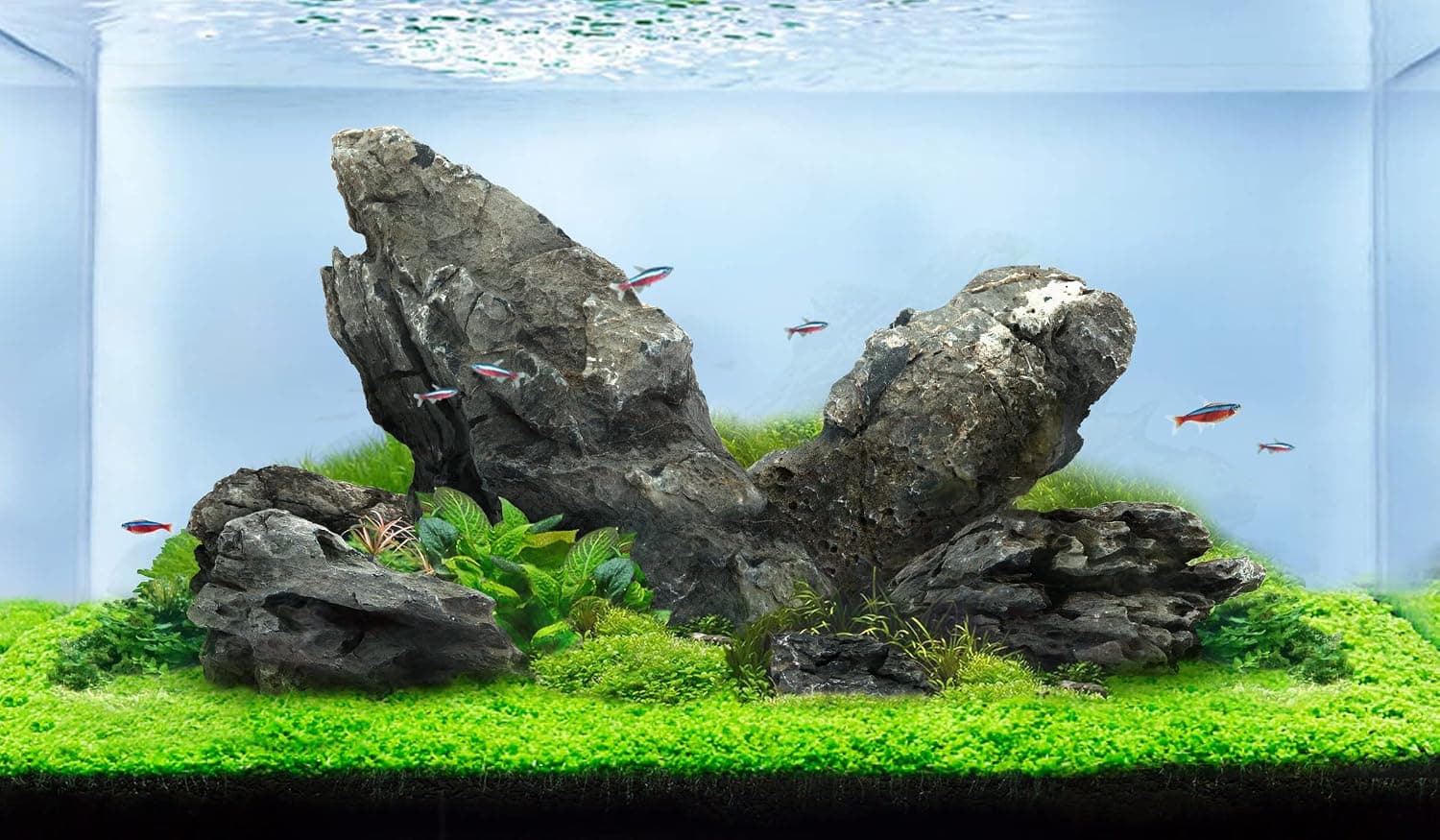
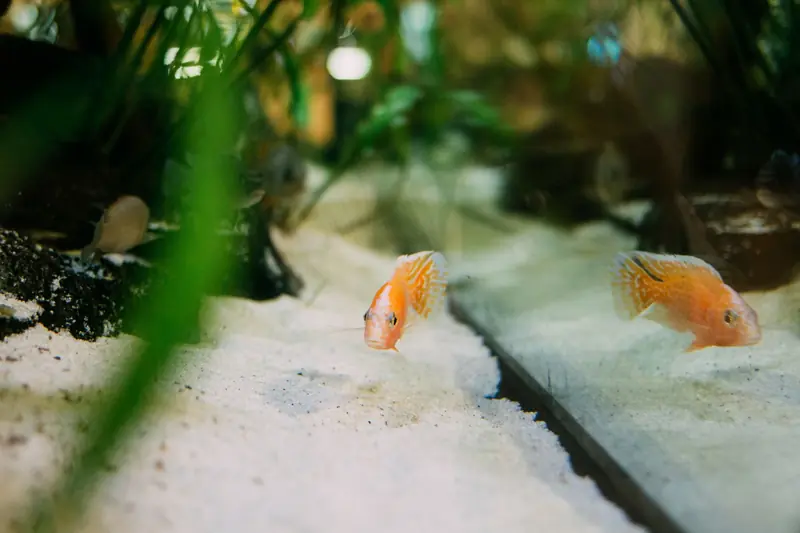
The defining feature of iwagumi is its use of stone as the sole hardscape, with no driftwood involved. Traditionally the arrangement uses an odd number of stones, most often three, to avoid the static, symmetrical feel that an even number creates. One dominant stone acts as the main focal point, with smaller stones arranged around it in supporting roles that lead the eye and create a sense of natural flow.
Each stone in a classic iwagumi has a role, and the composition works best when all the stones are of the same type so they read as belonging to the same formation. The main stone sets the tone and is placed slightly off-center following the rule of thirds. Secondary and smaller stones balance it without competing, tilted and positioned to suggest the way rocks settle in a real landscape.
Planting in iwagumi is deliberately minimal, usually a single carpeting species that covers the substrate like a lawn and lets the stones remain the stars of the show. This restraint is central to the style; adding too many plant varieties breaks the calm, unified feeling that makes iwagumi so striking. The carpet also emphasizes the open space that gives these layouts their sense of scale.
Because the style is so simple, there is nowhere to hide. A poorly placed stone or a patchy carpet is immediately obvious, and the carpeting plants that iwagumi relies on often need strong light and CO2 to grow in densely and evenly. This makes iwagumi more demanding than its minimalist appearance suggests, and many beginners underestimate the effort involved.
If you want to try iwagumi, start by collecting a set of matching stones and spend real time arranging them out of water until the composition feels balanced. Photograph your arrangement from the front to judge it as viewers will see it. Get the stonework right first, choose one reliable carpeting plant, and give it the light and care it needs. Done patiently, an iwagumi is a quietly powerful centerpiece.
Popular right now
- Best Clip-On Aquarium Lights for Planted Tanks (2026)Buying guide
- Best Nano Aquariums for Planted Tanks (2026)Buying guide
- Best Low-Iron Glass Tanks for Aquascaping (2026)Buying guide
- Best CO2 Regulators for Planted Tanks (2026)Buying guide
- Best Full-Spectrum Grow Lights for Planted Tanks (2026)Buying guide
- Best CO2 Tubing for Planted Tanks (2026)Buying guide
Based on the last 28 days of search and visitor data.