Thrive+ All in One Liquid Aquarium Fertilizer Two (2) 500ml Bottles Review (2026)
Updated September 21, 2026 · Research-based review
Our verdict
This listing bundles two 500ml bottles of NilocG Thrive+, a concentrated all in one fertilizer built for high-tech, CO2 injected planted tanks running under pH 7. Dosing at 1 mL per 5 gallons stretches the pair a long way and lowers cost per dose, though low-tech or higher pH tanks are a poorer match for this particular formula.
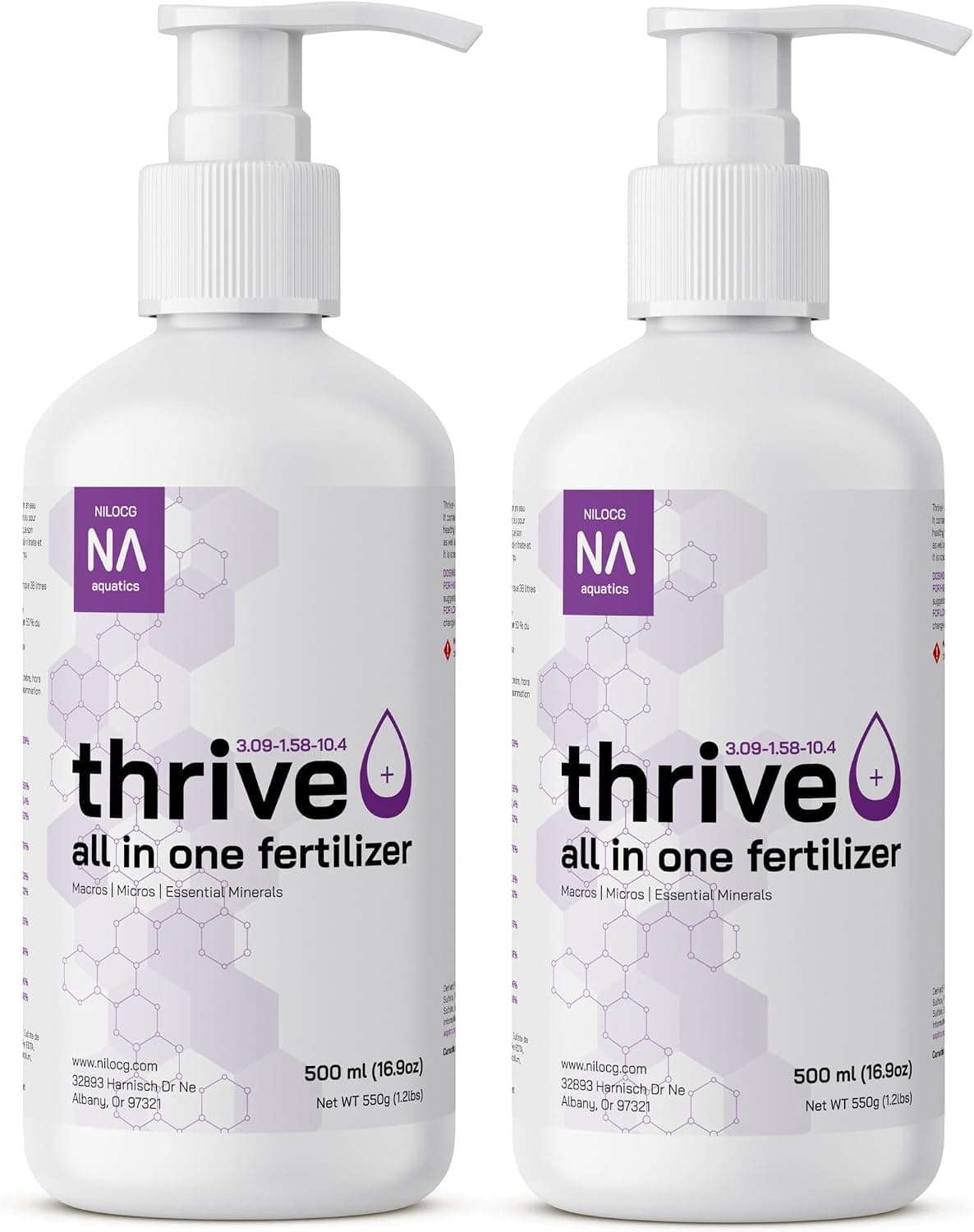
Thrive+ all in one liquid fertilizer in two 500ml bottles, a bulk supply for high-tech planted tanks.
Price range: See on Amazon
What we liked
- + Two 500ml bottles cover a long dosing period for large tanks
- + Buying in a pair lowers the cost per dose
- + Thrive+ formula suits high-light, CO2 injected aquascapes
Trade-offs
- - Large supply may age before small tank owners finish it
- - Not ideal for low-tech tanks where the lighter formula fits better
Who this fertilizer fits
Thrive+ is formulated for high-tech planted aquariums running strong lighting and pressurized CO2 injection, the setups that place the heaviest nutrient demand on fast growing stem plants and carpeting species. NilocG states the formula is intended for tanks with pH under 7, since it contains ammonium nitrogen that can convert toward ammonia at higher pH, so keepers running harder, more alkaline water should check their tank chemistry before choosing this version over a lower-nitrogen alternative. Buying two 500ml bottles together suits anyone dosing a larger tank, running multiple planted aquariums, or simply not wanting to reorder every few months, since the pair covers a long stretch of regular dosing at the recommended rate. Owners of small, low-light, low-tech tanks are a weaker match, since Thrive+ is tuned for demand that those slower growing setups do not generate.
What the fertilizer contains and how it doses
NilocG lists the formula at roughly 3.09 percent nitrogen, 1.58 percent phosphate and 10.4 percent potash, plus magnesium, chelated iron and a set of trace elements including boron, copper, manganese, molybdenum and zinc, covering both macro and micronutrients in one liquid. The stated dosing rate is 1 mL of Thrive+ per 5 gallons of aquarium water, applied up to three times weekly in high-light tanks or one to two times weekly under lower light, giving keepers a way to scale dosing to how fast their plants are actually growing. Because it is concentrated, a little goes a long way per dose, which is part of why the two-bottle bundle lasts a large tank many months rather than needing frequent restocking. NilocG notes the formula is safe for shrimp when dosed as directed, an important point for planted shrimp tanks running CO2.
Using it and living with it
Two 500ml bottles is a meaningful volume to store, and because Thrive+ is concentrated, overdosing carries real risk, with NilocG warning that excess dosing can trigger algae growth and rapid nutrient buildup rather than simply wasting product. Keepers with a single small tank may find the second bottle sits unopened for a long time before it is needed, and liquid fertilizers can lose potency gradually if stored for extended periods, so buying in bulk mainly pays off for anyone actively running multiple tanks or one large, heavily planted aquarium. Because the formula leans toward higher-demand tanks, pairing it with root tabs for root-feeding plants like swords and crypts is worth considering, since NilocG notes the liquid dose alone does not replace substrate-level feeding for those species.
How it compares with close rivals
The standalone single 500ml Thrive+ bottle covers the same concentrated high-tech formula in a smaller quantity, a better fit for anyone unsure they will use up a second bottle before it ages. NilocG's own Thrive C is formulated specifically for low-tech tanks without CO2 injection, a lighter dose better suited to slower growth than Thrive+ delivers, so tanks running without pressurized CO2 should look there instead. The pump-bottle Thrive from the same maker offers the same core nutrient profile in a different dispensing format, while third-party liquid fertilizers like Seachem Flourish or NilocG's own NPK+M products isolate specific nutrient groups rather than combining everything into one bottle, useful for keepers who want to dose nitrogen, phosphorus and potassium independently.
Verdict and who should pick something else
This two-bottle bundle earns its place for keepers running high-tech, CO2 injected planted tanks under pH 7 who want a single concentrated liquid covering both macro and micronutrients without juggling several bottles. It rewards larger tanks or multi-tank setups where the extra volume gets used before it ages. Choose the single bottle instead for a first try or a smaller tank, switch to Thrive C for a low-tech, non-CO2 setup, and pair either with root tabs if the tank leans heavily on root-feeding plants, since this liquid formula is not designed to replace substrate fertilization on its own.
Frequently asked questions
What is the dosing rate for Thrive+?
NilocG recommends 1 mL of Thrive+ per 5 gallons of water, dosed up to three times weekly in high-light tanks or one to two times weekly under lower light.
Is Thrive+ safe for tanks with a high pH?
NilocG formulates Thrive+ for tanks under pH 7 because it contains ammonium nitrogen that can convert toward ammonia at higher pH, so it is not the best match for harder, more alkaline water.
Does Thrive+ replace root tabs?
No, NilocG notes it is a liquid column fertilizer, and root-feeding plants like swords and crypts still benefit from separate root tabs placed in the substrate.
Is Thrive+ safe for shrimp?
NilocG states the formula is safe for shrimp when dosed as directed, which matters for keepers running planted shrimp tanks with CO2 injection.
Prices change often, so check the current price and availability on Amazon.
Check price on AmazonAquascape Nest may earn a commission from the link above.